Two Ways to Build the Engine
Every film's solar behavior comes from its functional layer, and the industry builds that layer in one of two fundamentally different ways. The construction method matters as much as the material — sometimes more.
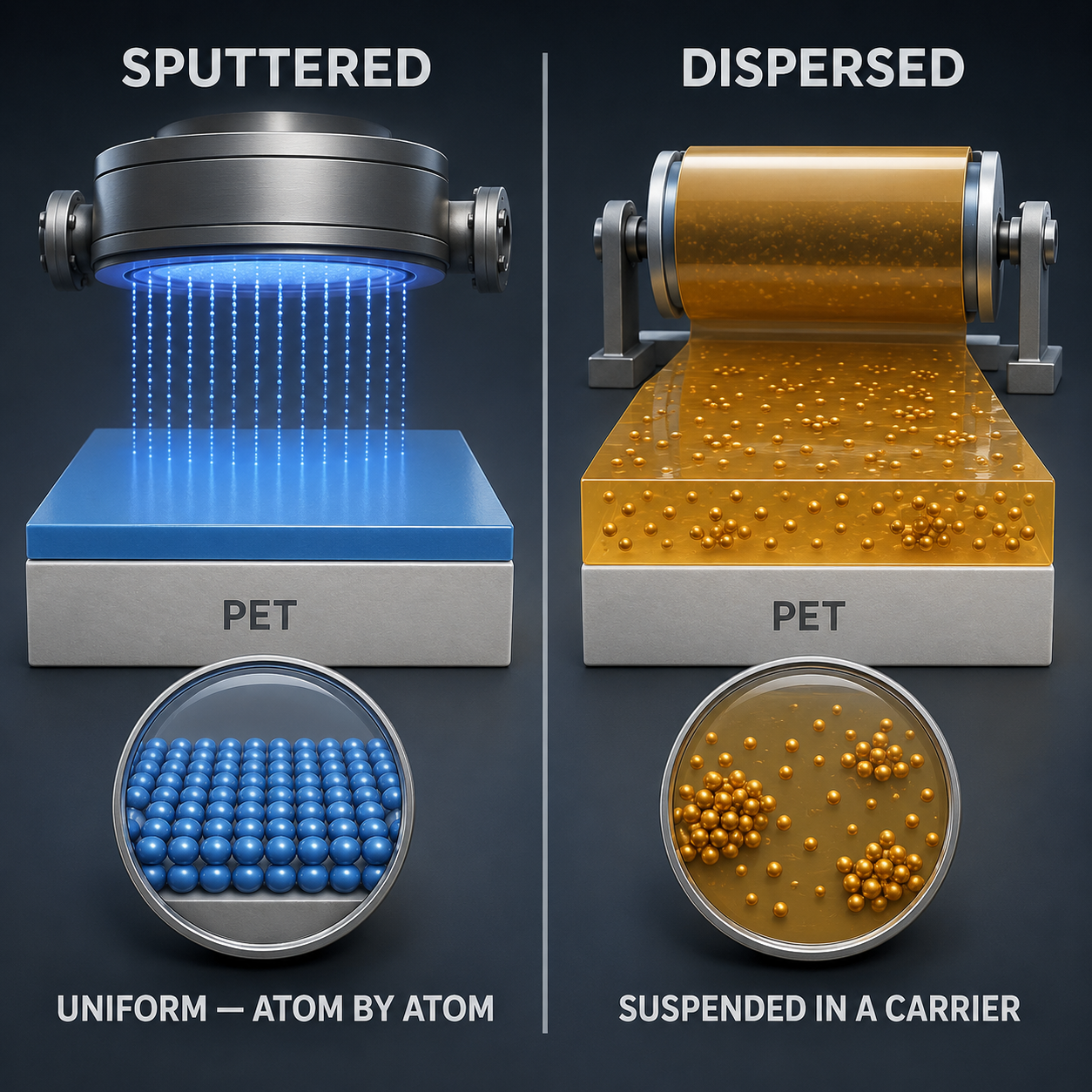
Method one: sputtering. A vacuum deposition process. Inside a vacuum chamber, a target of source material is bombarded with high-energy particles, dislodging atoms that deposit onto the PET substrate essentially one atomic layer at a time. The result is a continuous, uniform layer with consistent composition and thickness at every point — there is no carrier substance; the deposited material is the layer. Sputtering operates at nanometer-scale precision, and the deposition conditions — gas composition, pressure, power — determine the layer's character. The trade-off is capital: sputtering lines are expensive industrial infrastructure, and relatively few facilities operate them.
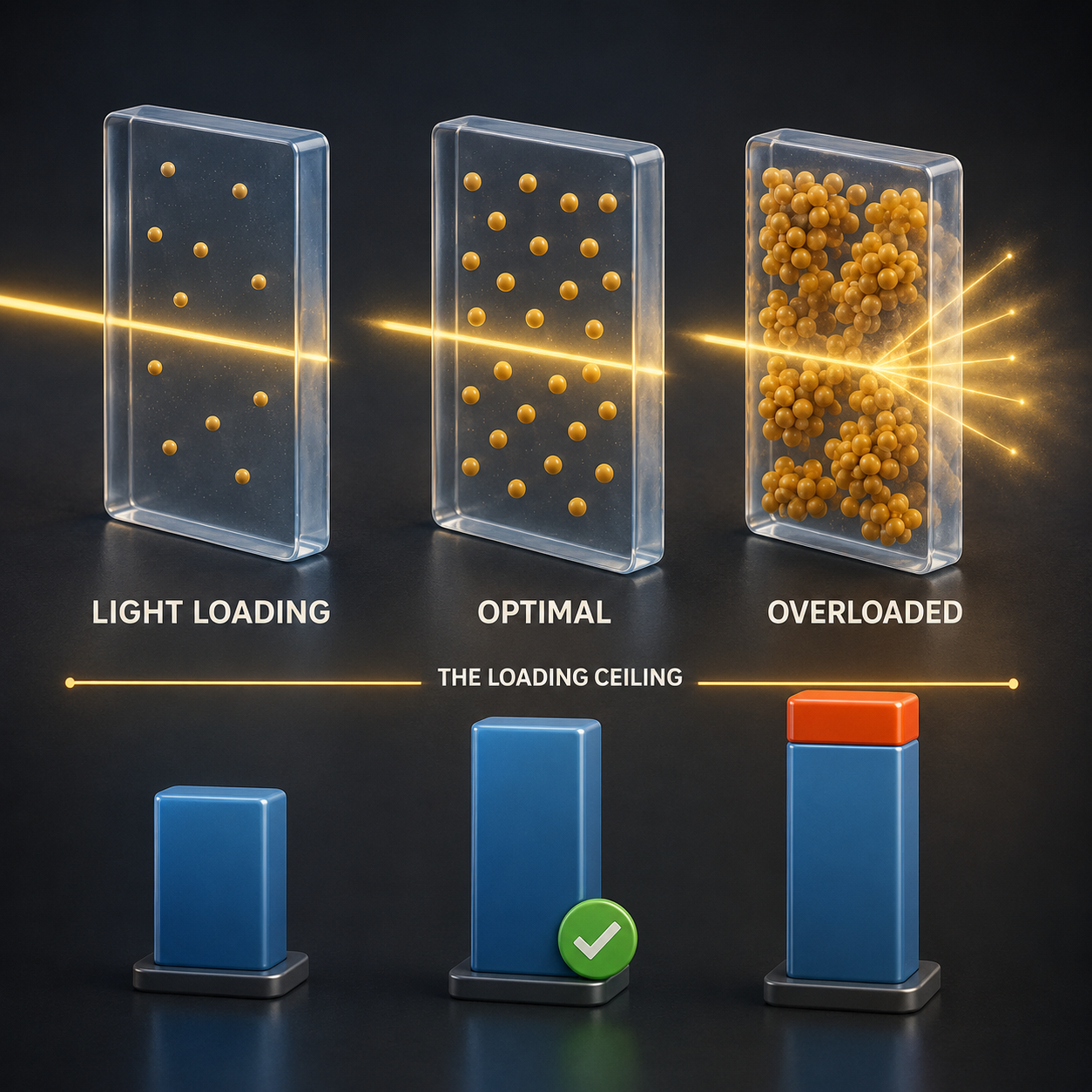
Method two: particle dispersion. Functional particles are suspended in a carrier medium — an adhesive, a coating, or a dye layer — and applied during the coating or lamination stage. The particles do the solar work, but they float within another substance rather than forming a structural layer themselves. Particle placement is never perfectly uniform at the microscale, and performance faces a loading ceiling: pack in too many particles and clarity and adhesion begin to suffer. The process is far less capital-intensive than sputtering, which is precisely why it dominates the market's middle tiers.
Two films built these two ways can look identical on installation day. The differences — in uniformity, in mechanism, in how they age — emerge over the chapters ahead.
If you're just finding this page, here's the quick context: our focus is sharing the science behind the sun's energy and how window film actually affects it. This is one chapter in an ongoing series — to see more, visit our page or give us a follow to keep window film and sun's energy facts coming to your feed.