
The Ceiling: What Physics Allows
A window must transmit visible light, or it is no longer a window. That single requirement places a ceiling on TSER — and the ceiling can be located twice: once from theory, once from the published record. The two agree.
From theory, using the band budget: UV's roughly 5% can be rejected nearly completely without affecting visibility. NIR's roughly 51% can be managed substantially, contributing the largest share of any realistic total. The visible band's roughly 44% is the sliding term — its contribution must be purchased with darkness, point for point. The result is not one ceiling but a curve: the maximum honest TSER rises as VLT falls. Clarity makes rejection hard-won; darkness buys it cheaply.
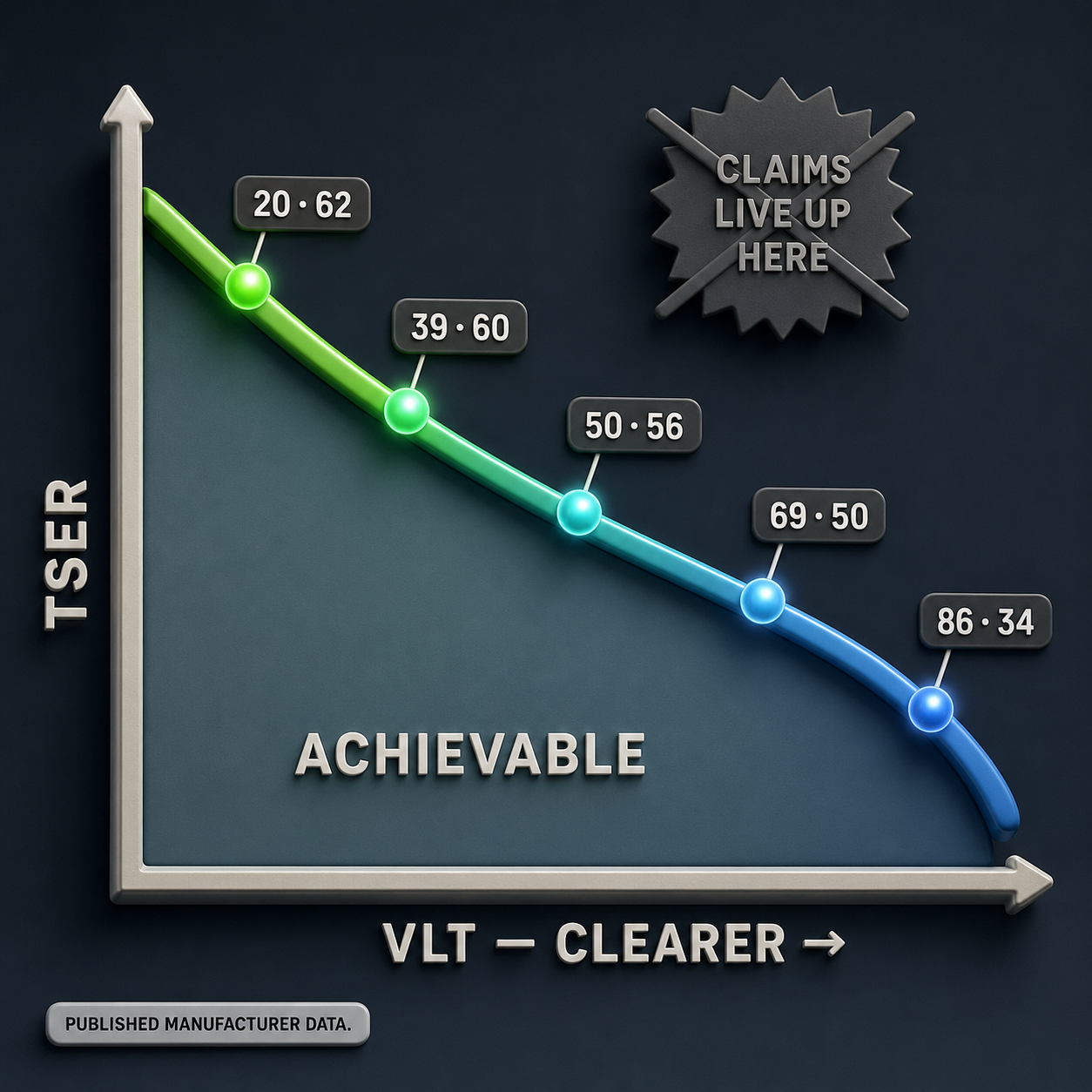
From the published record, one manufacturer's automotive line traces the curve precisely: roughly 34% TSER at 86% VLT, 50% at 69% VLT, 56% at 50% VLT, 60% at 39% VLT, 62% at 20% VLT — with the brand's strongest published products topping out at 62–63% TSER at dark shades. Across every tier, the pattern holds: real top-published performance lives in the mid-30s to low-60s depending on darkness, with roughly 50% representing excellent performance for a light, highway-legal film.
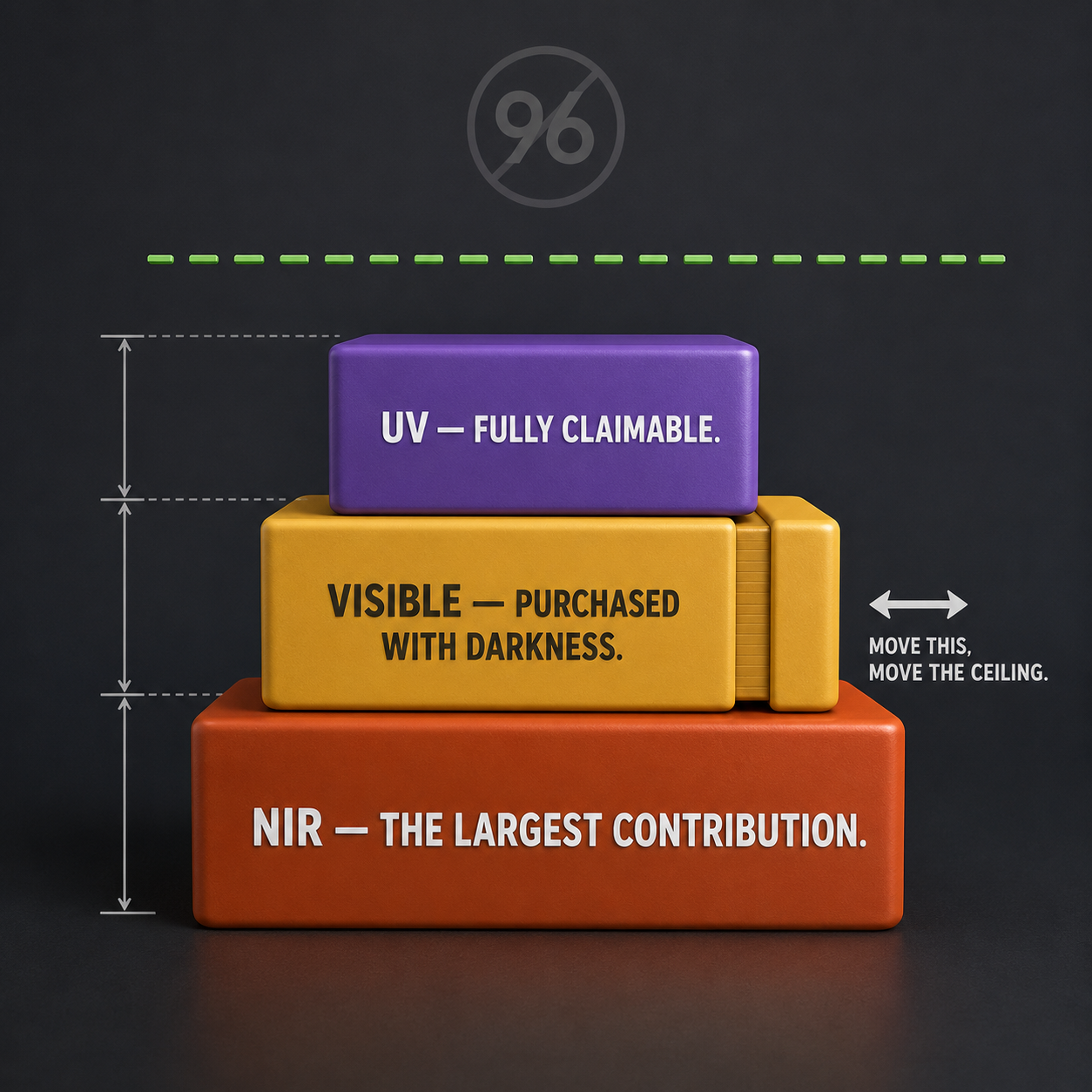
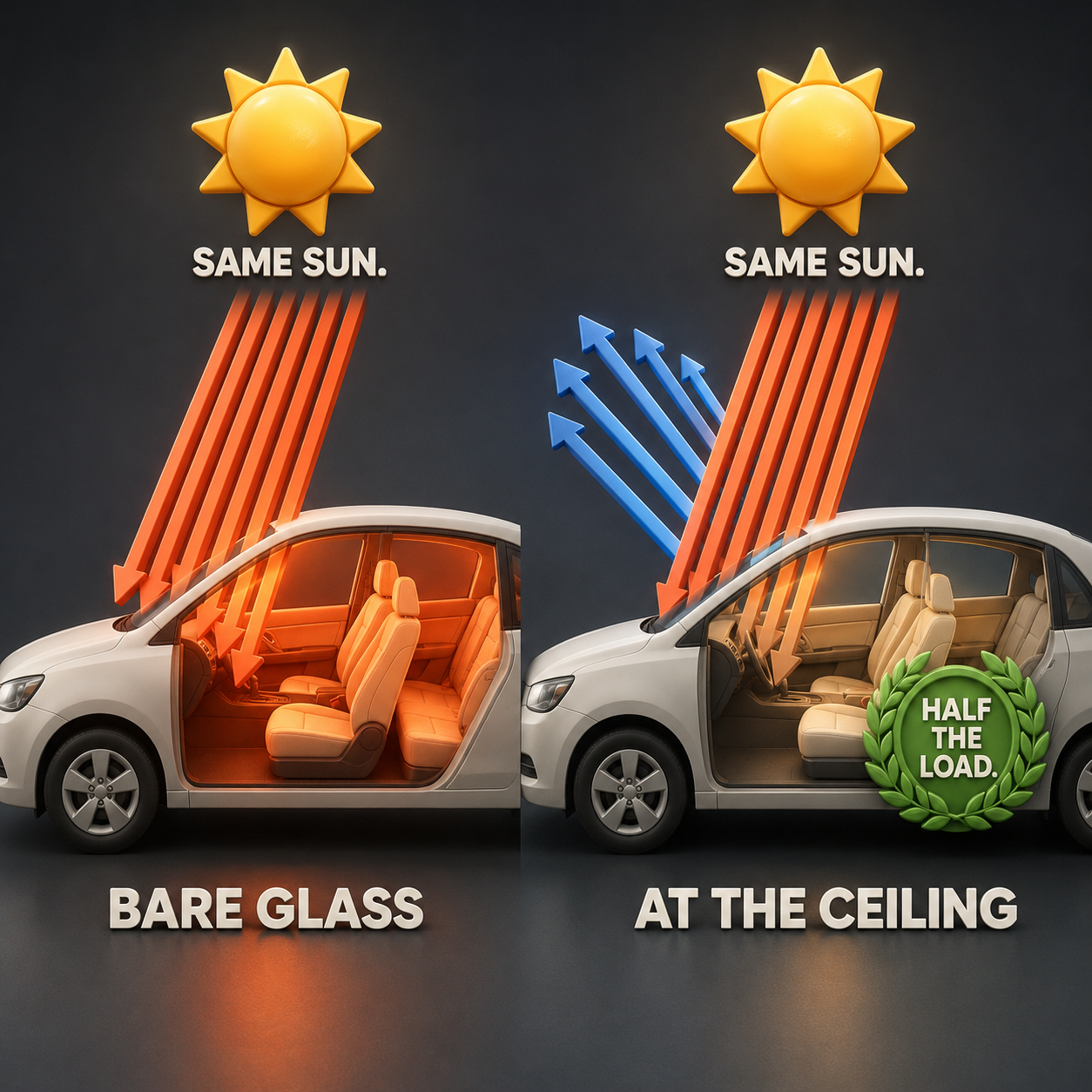
Both routes arrive at the same place, and the place matters: there is no transparent film posting an honest full-spectrum number anywhere near the largest figures in circulation. A claim dramatically above the published curve — at a stated VLT — is making a statement the physics of transparency does not readily allow, and deserves exactly that level of scrutiny.
The ceiling is not a disappointment. It is the honest measure of a genuinely difficult engineering problem — and the products near it are the achievement.
If you're just finding this page, here's the quick context: our focus is sharing the science behind the sun's energy and how window film actually affects it. This is one chapter in an ongoing series — to see more, visit our page or give us a follow to keep window film and sun's energy facts coming to your feed.