
Haze: The Number Nobody Reports
There is an optical quantity entirely separate from every heat metric in this series, and it is almost never published: haze.
Haze is the percentage of transmitted light that scatters off-axis rather than passing straight through. A pane can transmit generously and still scatter a meaningful share of that light sideways — producing the milky, washed, glare-prone look familiar from low-angle sun. The measurement is standardized, instrumented, and routine in optical laboratories. It is simply absent from most consumer-facing documentation.
Haze matters because it is independent of everything else on the sheet. Infrared performance and optical clarity are separate quality dimensions: a sample can post strong heat numbers and poor haze simultaneously, and nothing in VLT, IRR, IRER, or TSER will reveal it. VLT counts light that gets through; haze describes what condition it arrives in.
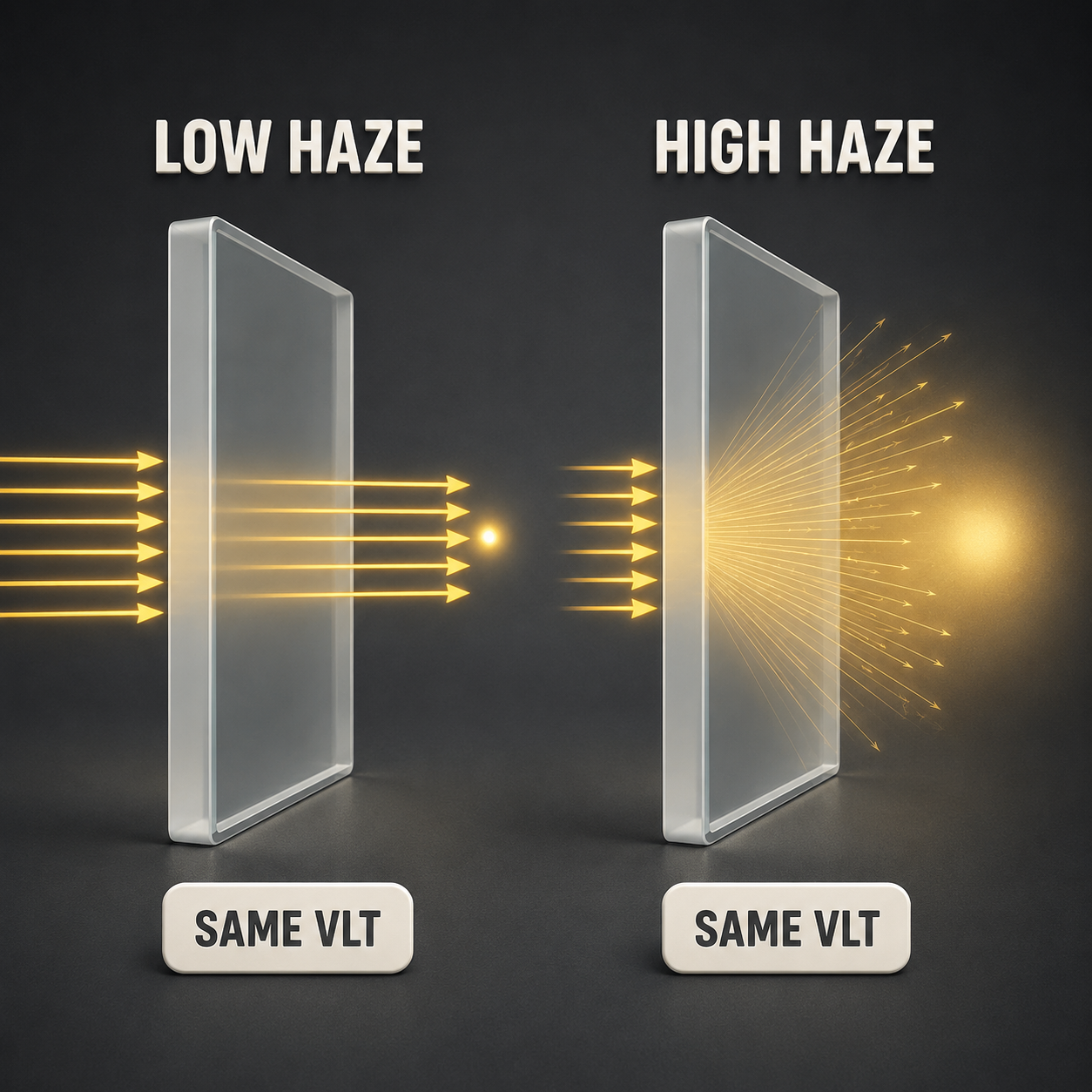
It also matters because haze is a time variable. Series 4 will detail the physical causes — particle dispersion variations, layer-interference effects, and progressive changes as materials age — but the measurement point belongs here: a haze figure at installation is not a haze figure at year five. Optical quality has a trajectory, and a single static number, even when disclosed, describes only its starting point.
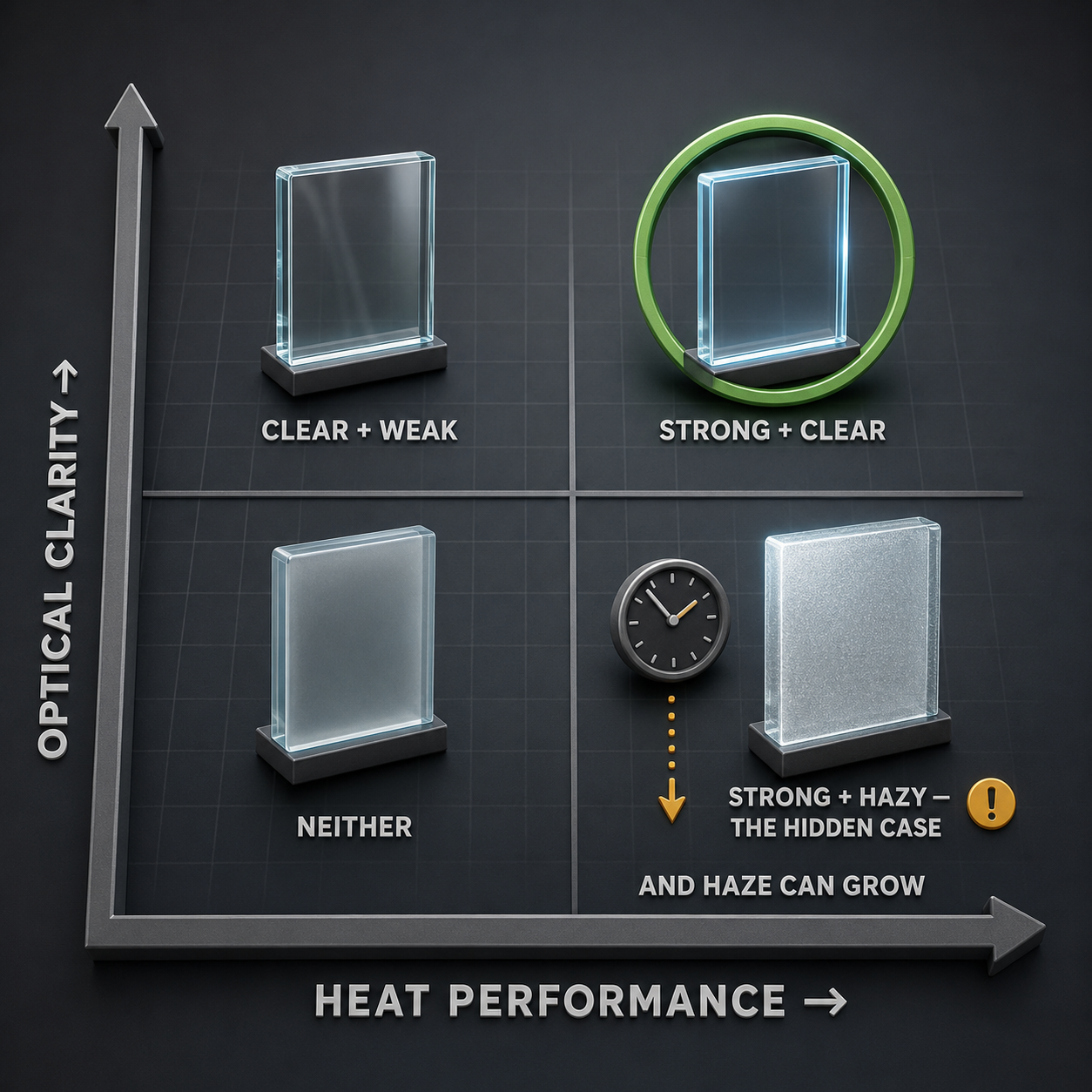
The practical takeaway is a question worth normalizing: alongside every heat metric, what is the haze — and what does it become over time? In an industry that reports the numbers that flatter, the routinely measurable number that goes unreported says something too.
If you're just finding this page, here's the quick context: our focus is sharing the science behind the sun's energy and how window film actually affects it. This is one chapter in an ongoing series — to see more, visit our page or give us a follow to keep window film and sun's energy facts coming to your feed.