
Blocked Is Not Rejected
The second place IRR's honesty bends is in the word "blocked."
An IRR measurement counts the infrared energy that fails to transmit through the sample. But Series 2 established that non-transmission has two very different forms. Energy reflected at the surface leaves the system entirely — the closed door, zero aftermath. Energy absorbed into the material becomes heat within it, and a heated material sheds heat from both faces — including the face pointed indoors. The door closed, and the room warms anyway.
A standard IRR figure does not distinguish between these outcomes. Reflected and absorbed energy score identically as "rejected," even though one delivers nothing onward and the other partially completes the journey as re-radiated heat. Two samples can post the same IRR while delivering meaningfully different inward heat — purely on the split between their reflection and absorption.
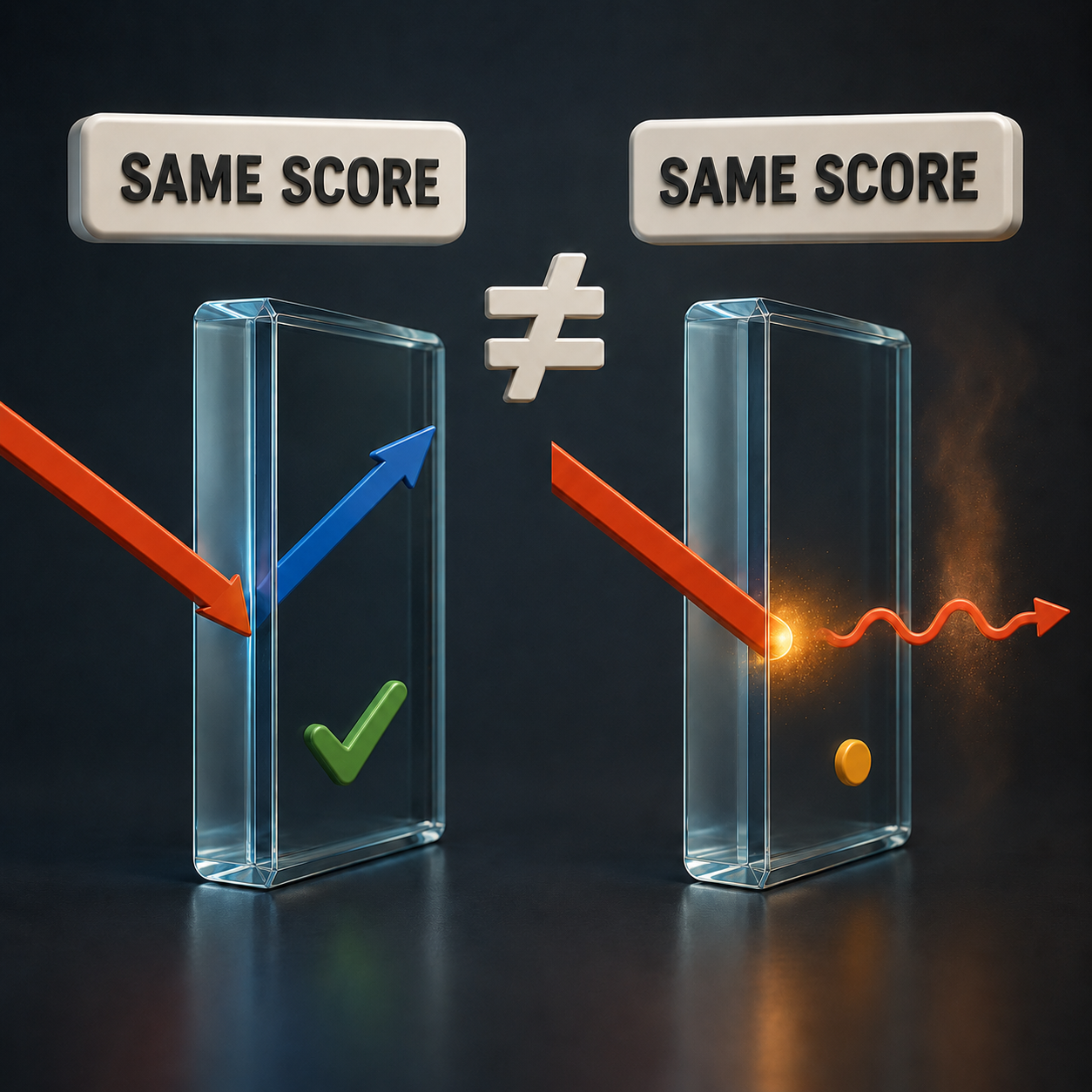
The formal accounting that does distinguish them exists, and it is the foundation of the better metrics ahead. In the technical and patent-literature definition of total solar energy rejection, reflectance counts in full, while absorption counts only to the extent the captured energy is re-radiated and conducted or convected outdoors. The inward leak is charged against the system, not credited to it.
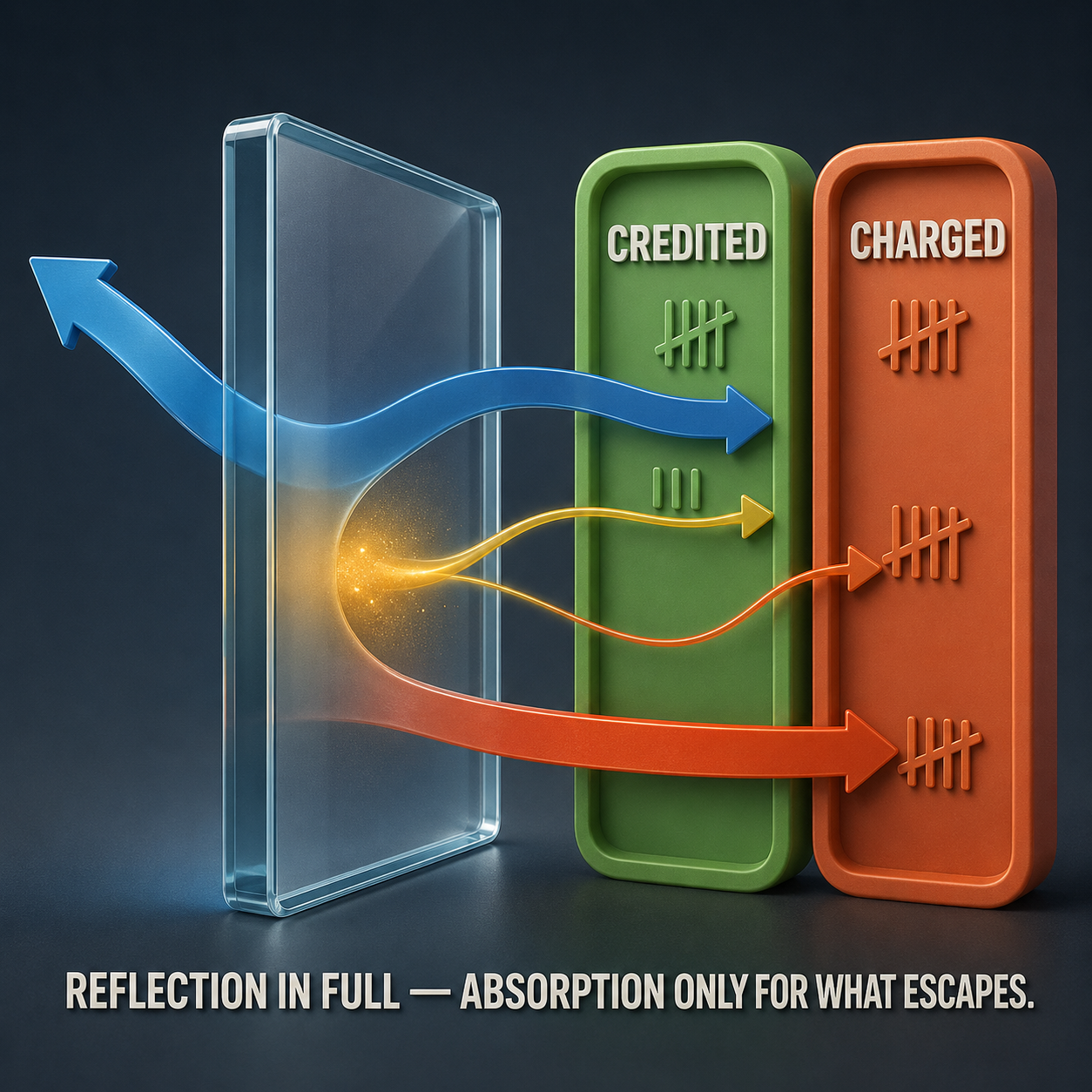
That accounting standard is the dividing line of this entire series: metrics that ignore the leak versus metrics that charge for it. IRR, as commonly published, ignores it. The chapters ahead introduce the ones that do not.
If you're just finding this page, here's the quick context: our focus is sharing the science behind the sun's energy and how window film actually affects it. This is one chapter in an ongoing series — to see more, visit our page or give us a follow to keep window film and sun's energy facts coming to your feed.