
Not All Infrared Is Equal
Even a full-band, mechanism-aware infrared measurement faces one more layer of honesty: the spectrum's shape.
Series 1 established the fact; this chapter applies it to measurement. Solar energy within the NIR band is not evenly distributed. Energy density peaks in the lower NIR near 900 to 1,000 nanometers, drops through the atmospheric notches, and tapers substantially toward 2,500 nanometers — all documented wavelength-by-wavelength in ASTM G173. A nanometer near the peak carries several times the solar power of a nanometer in the tail.
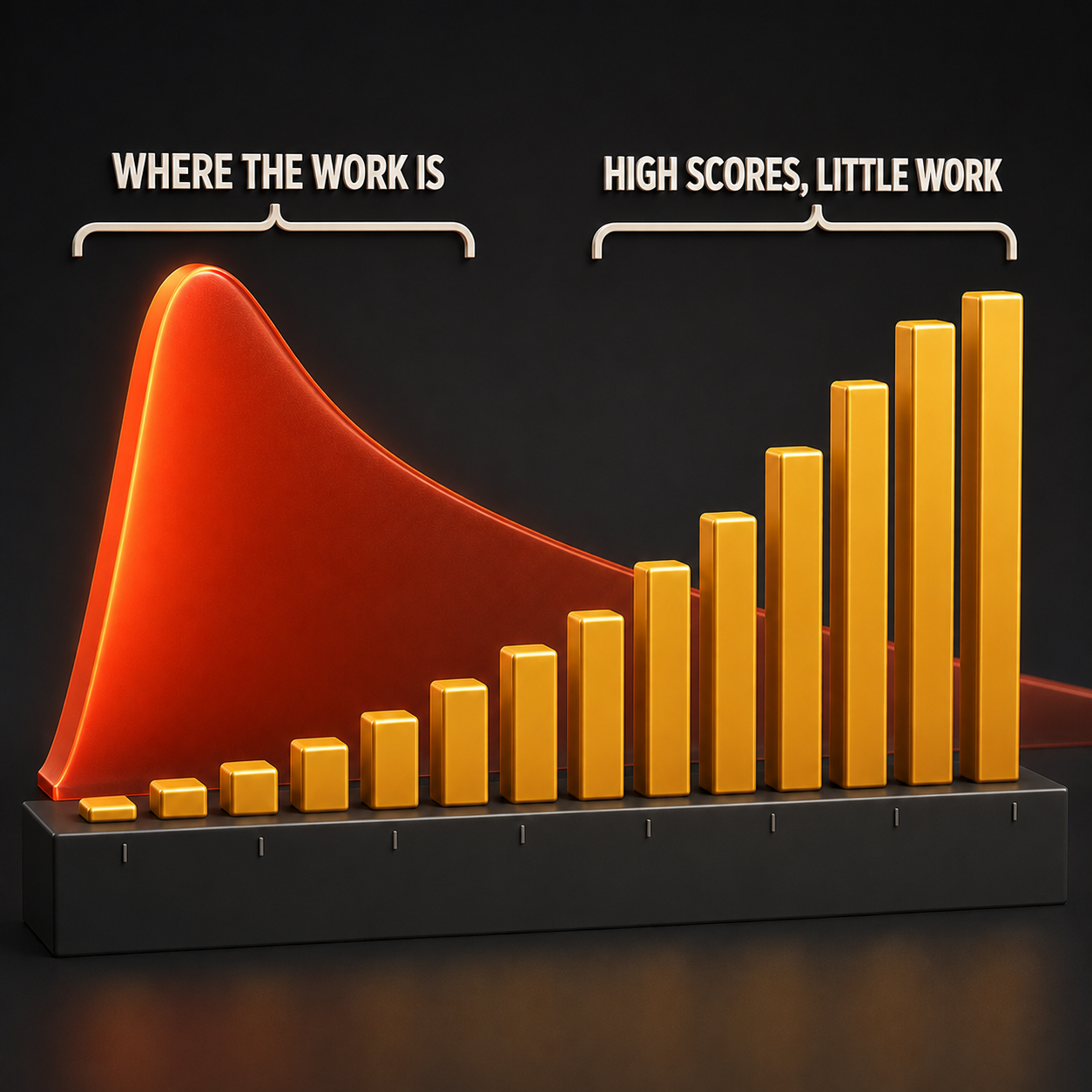
The measurement consequence: equal percentages are not equal work. Strong performance concentrated where energy is sparse removes little real heat; moderate performance positioned over the energy-dense zone removes a great deal. Any calculation that averages performance across wavelengths without weighting for the energy each wavelength carries reports wavelength coverage, not energy impact — and systematically flatters performance that happens to live in the tail.
The honest alternative is energy weighting: scoring performance at each wavelength in proportion to the solar energy actually present there, with ASTM G173 supplying the weights. An energy-weighted infrared figure answers the question that matters — what share of infrared energy was managed — rather than the question that flatters — what share of wavelengths scored well.
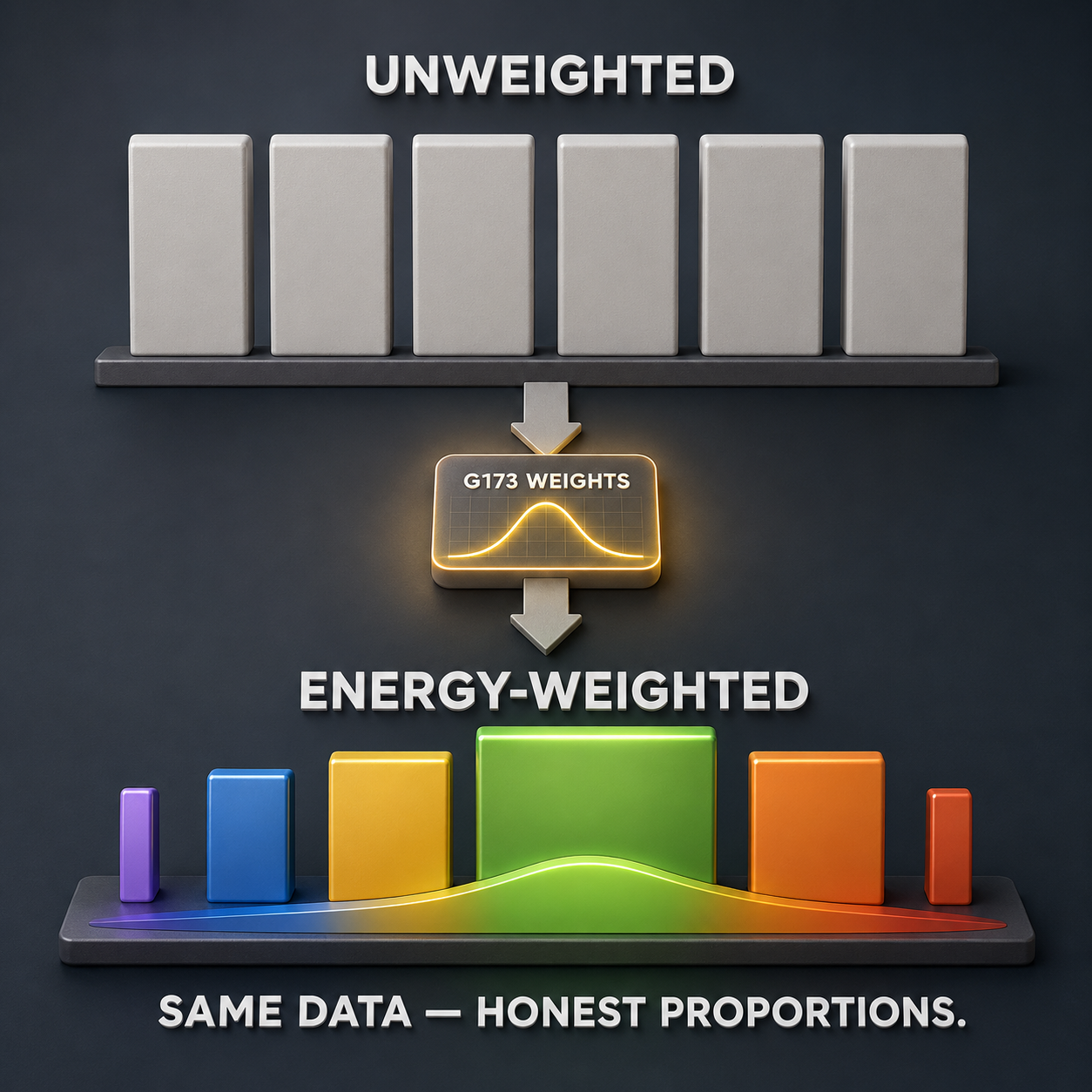
Energy weighting is not exotic mathematics. It is an integration against a published reference curve, available to any laboratory. The next chapter introduces the published metric built on exactly this principle.
If you're just finding this page, here's the quick context: our focus is sharing the science behind the sun's energy and how window film actually affects it. This is one chapter in an ongoing series — to see more, visit our page or give us a follow to keep window film and sun's energy facts coming to your feed.