
The Range Problem
The near-infrared band spans roughly 700 to 2,500 nanometers — a stretch of about 1,800 nanometers. No universal standard dictates which portion of that band an IRR figure must be measured across. The range is a methodology choice, and the choice changes the number.
This is not hypothetical. Published manufacturer documentation makes the variation explicit: one major manufacturer's automotive spec sheets state that their IRR figure is measured on film from 900 to 1,000 nanometers — a 100-nanometer window within the band. The same manufacturer's IRER metric, by its published definition, spans 780 to 2,500 nanometers. Two infrared numbers, two ranges differing by a factor of seventeen, printed by one company on one sheet.
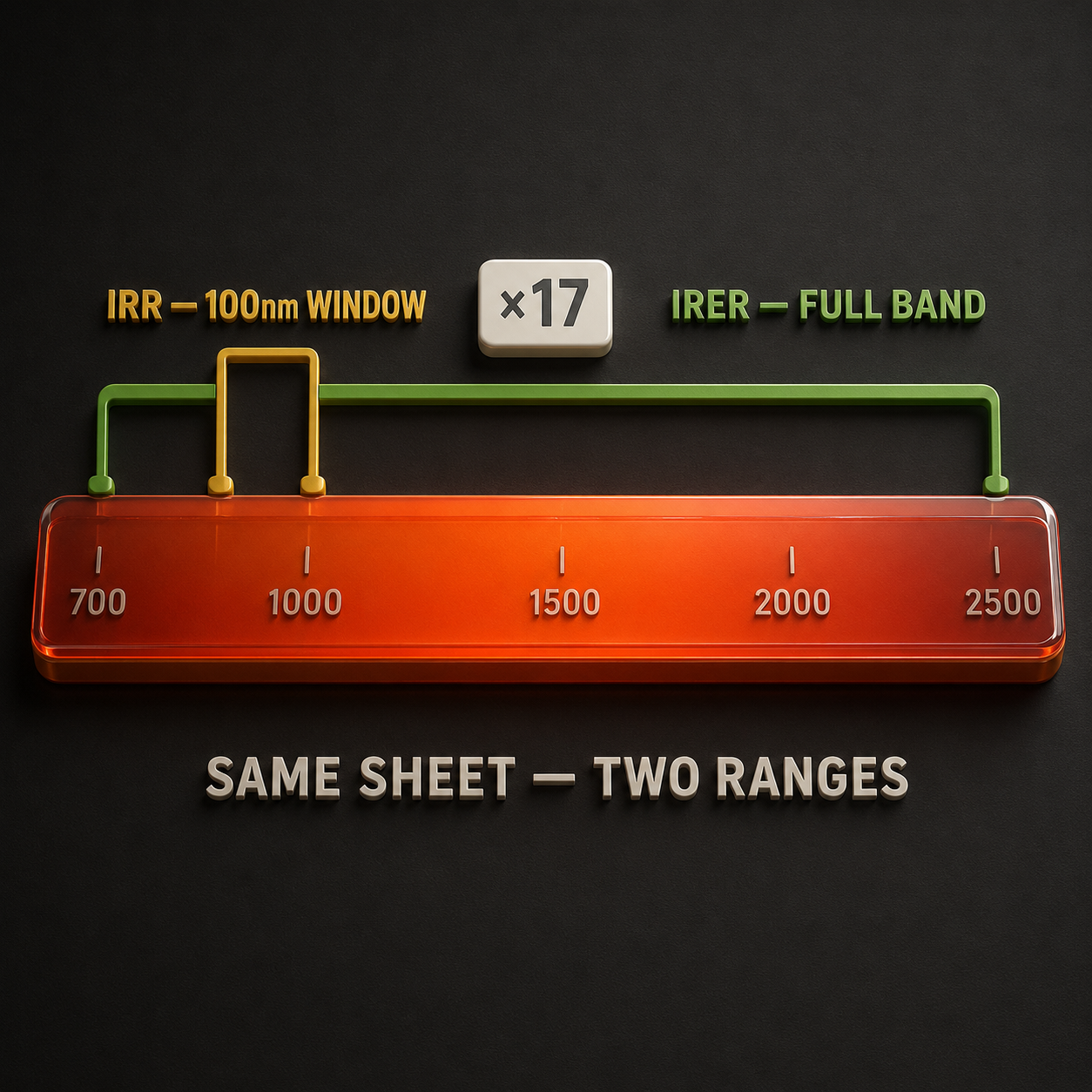
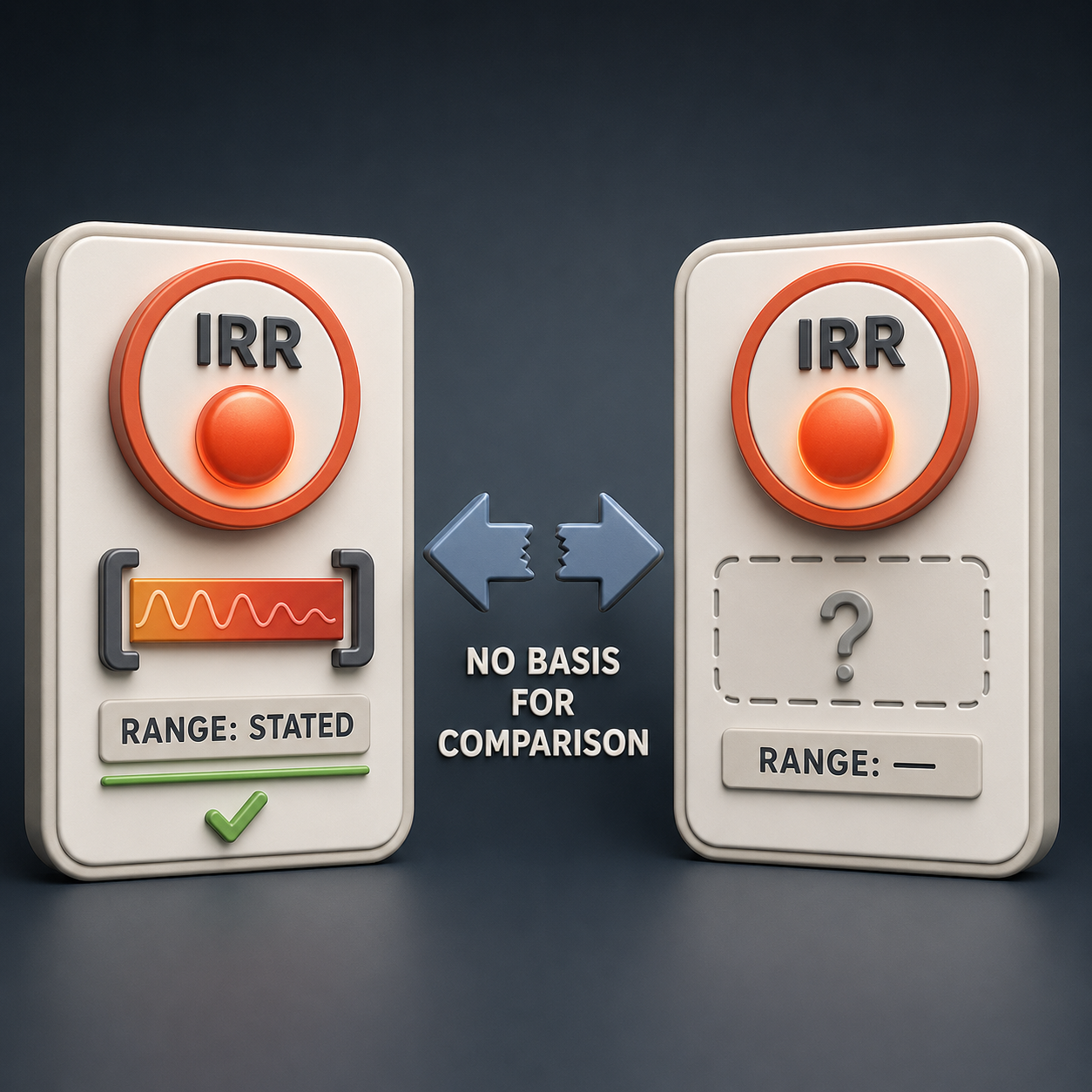
The disclosed 100-nanometer window at least allows informed reading. The deeper problem is comparison: when two brands print "IRR" measured across different, undisclosed ranges, the numbers cannot be meaningfully compared — to each other, or to anything. A percentage without its range is a score without its test.
There is also a chemistry dimension, established in Series 1's spectrum chapter and expanded in Series 4: different infrared-managing materials work in different sub-ranges of the band. A test window positioned where one material performs — and another doesn't — can flatter the first and bury the second, without a single false data point.
The practical rule this chapter establishes: an IRR figure is only as meaningful as its disclosed range. Range stated, the number can be read in context. Range absent, the number is decoration.
If you're just finding this page, here's the quick context: our focus is sharing the science behind the sun's energy and how window film actually affects it. This is one chapter in an ongoing series — to see more, visit our page or give us a follow to keep window film and sun's energy facts coming to your feed.