
What Is IRR — And Why It's Not Heat Rejection
IRR — Infrared Rejection — is the most heavily marketed performance number in window glazing. It describes the percentage of infrared energy blocked across some infrared wavelength range. Two structural facts separate it from heat rejection before any testing methodology even enters the discussion.
First: infrared is not heat. Infrared is radiation — photons that become heat upon absorption, exactly as Series 1 established. And per Series 2, "blocked" energy includes energy the measured material absorbed into itself, which partially re-radiates onward anyway. IRR counts what fails to transmit; it does not distinguish energy reflected cleanly away from energy captured and partially delivered.
Second: infrared is not the whole spectrum. The NIR band carries roughly half of solar energy. A theoretically perfect IRR score would still say nothing about the visible band's roughly 44% — energy that transmits, strikes interior surfaces, and becomes heat with full efficiency. A metric scoped to infrared is, by construction, graded on roughly half the exam.
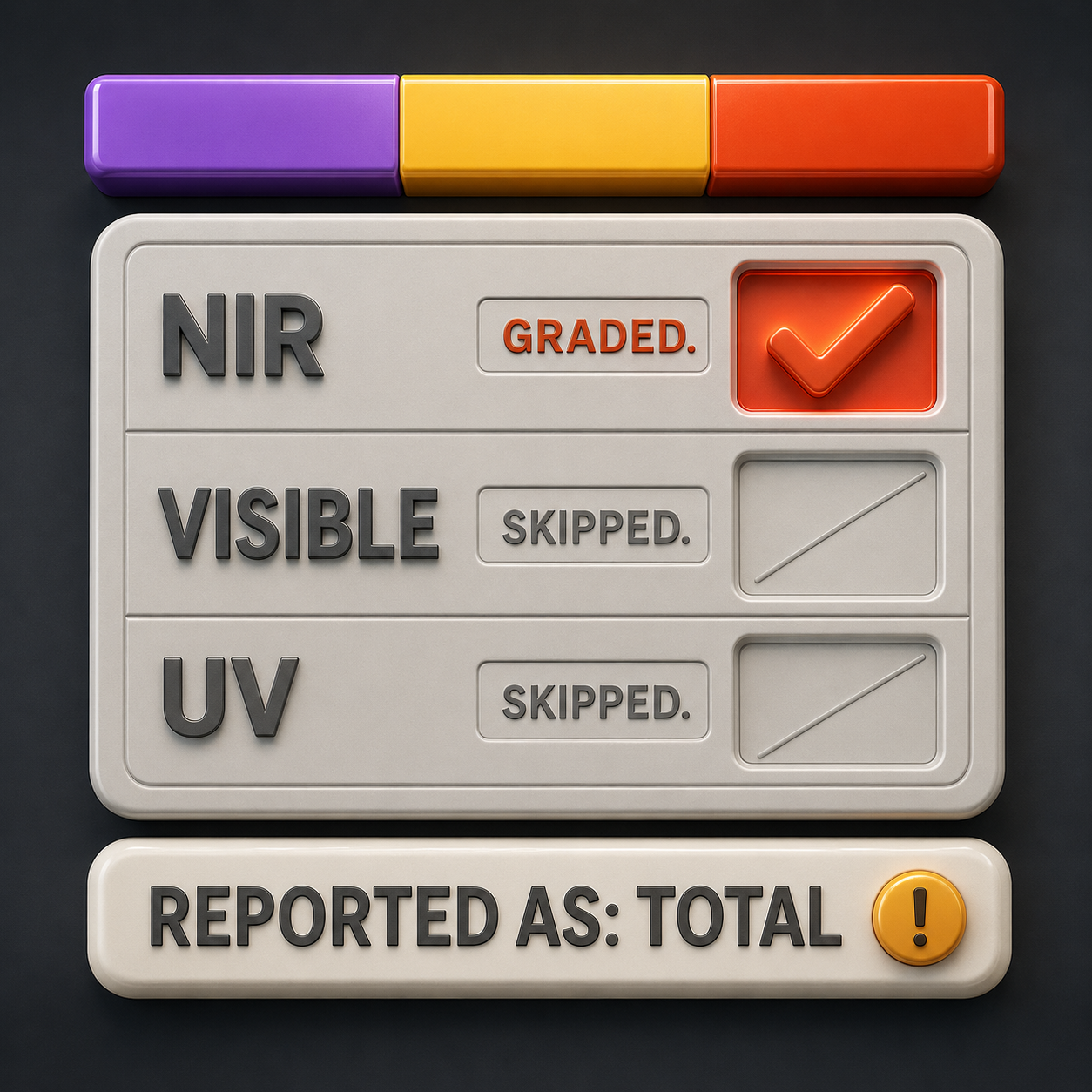
Neither fact makes IRR meaningless. It is a real measurement of a real property. The problem is the translation: "infrared rejection" presented or read as "heat rejection" converts a partial, mechanism-blind measurement into a total claim. The number is honest about what it measured; the framing around it frequently is not.
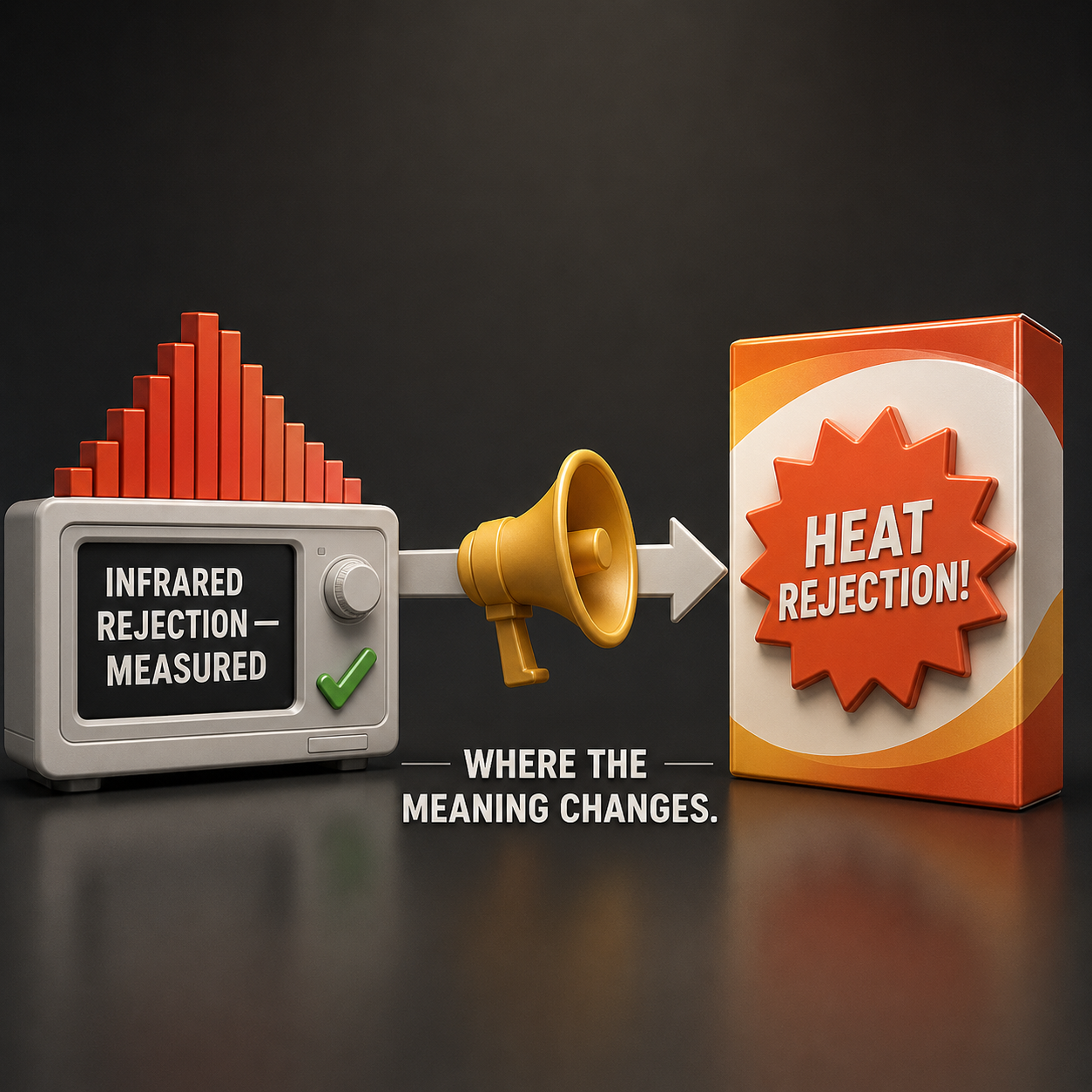
The next two chapters examine the two specific places where IRR's honesty breaks down in practice — the wavelength range it is measured across, and the definition of "blocked" it relies on.
If you're just finding this page, here's the quick context: our focus is sharing the science behind the sun's energy and how window film actually affects it. This is one chapter in an ongoing series — to see more, visit our page or give us a follow to keep window film and sun's energy facts coming to your feed.