
VLT: The Number Everyone Knows
Visible Light Transmission — VLT — is the most familiar number in glazing: the percentage of visible light that passes through. A 70% VLT pane transmits 70% of the visible light striking it; a 20% VLT pane transmits 20%. It is what most people mean when they call a window "darker" or "lighter."
What VLT measures is precise and narrow: transmission within the visible band only — roughly 400 to 700 nanometers, the slice of the spectrum human eyes detect. It says nothing about ultraviolet, nothing about infrared, and nothing about heat. Per the three-band budget from Series 1, VLT describes behavior in a band carrying roughly 44% of solar energy while remaining silent on the other 56%.
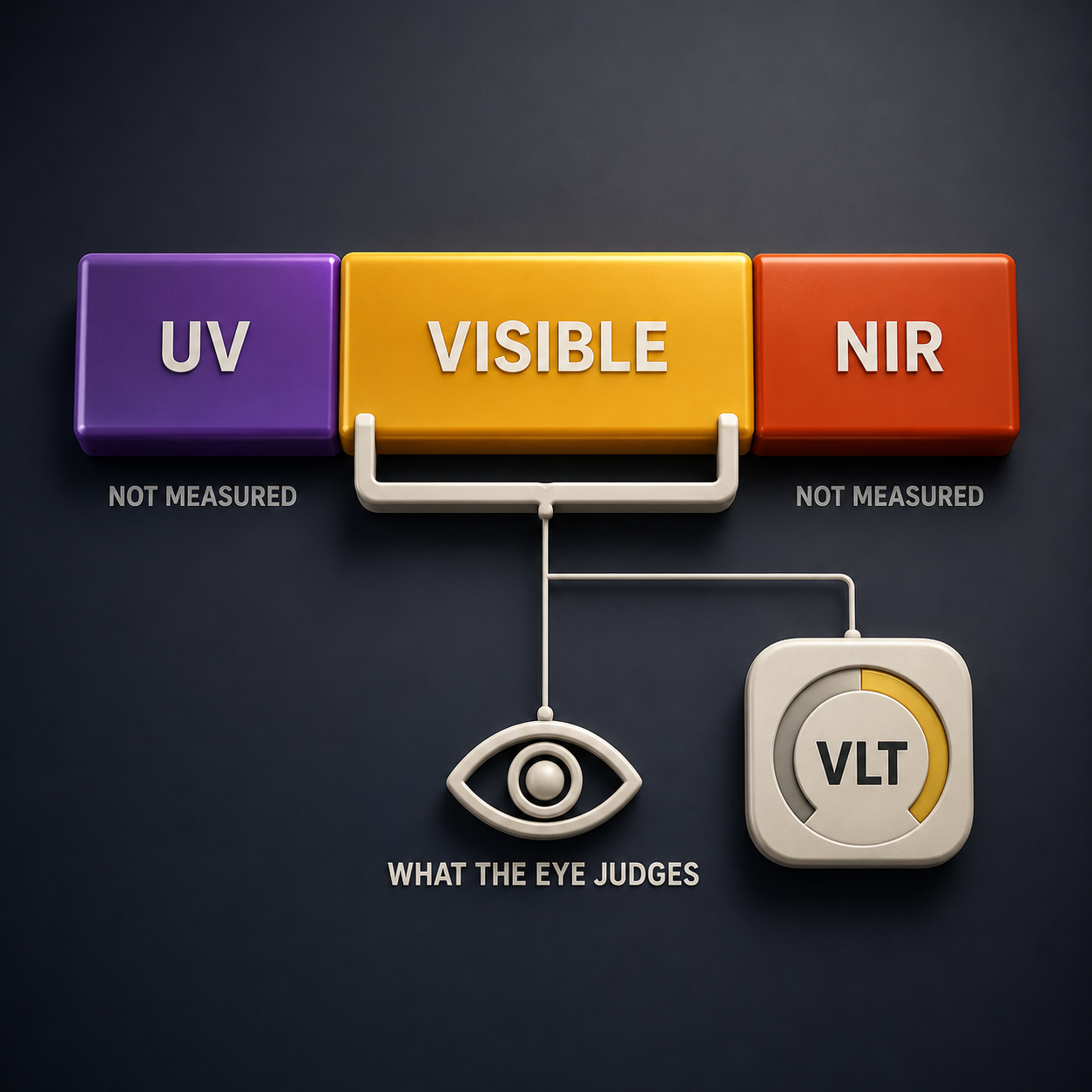
This is why darkness is not performance. A very dark pane can manage infrared poorly; a nearly clear one can manage it well. The eye judges VLT and only VLT — and the eye is therefore a poor instrument for judging heat.
VLT still matters enormously, for two reasons. First, it is the legally regulated number: jurisdictions set minimum VLT requirements for vehicle glass, making it the constraint every other choice operates within. Second — and this becomes central later in this series — VLT is one half of the most informative pairing in all of performance documentation. A heat-rejection figure means little without knowing the VLT it was achieved at, because darkness buys rejection cheaply, while clarity makes it hard-won.
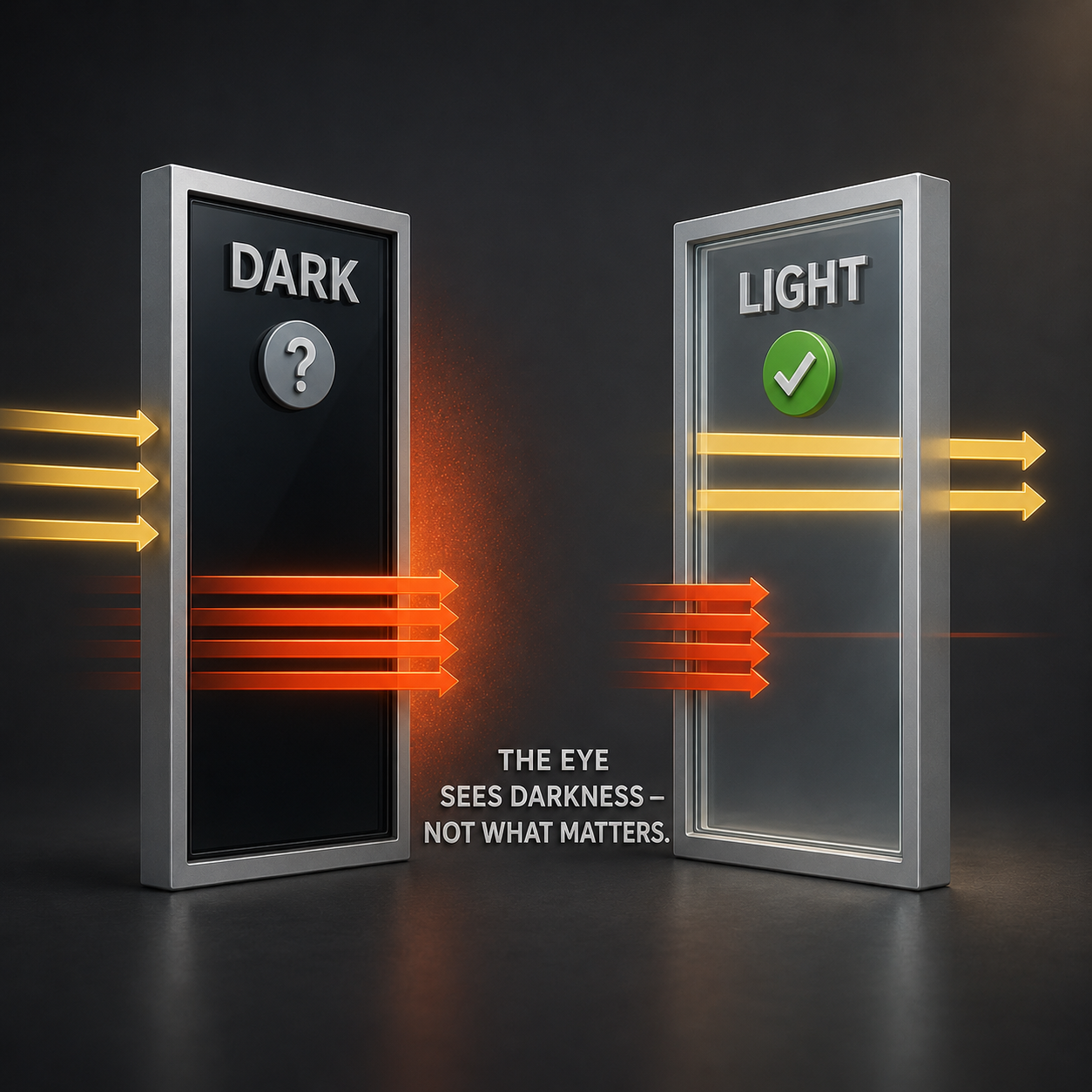
VLT is the honest, simple opening metric: perfectly trustworthy for what it measures, and a recurring lesson in what a single number cannot say.
If you're just finding this page, here's the quick context: our focus is sharing the science behind the sun's energy and how window film actually affects it. This is one chapter in an ongoing series — to see more, visit our page or give us a follow to keep window film and sun's energy facts coming to your feed.