
Emissivity: How Surfaces Let Go of Heat
Two surfaces at the same temperature do not necessarily radiate the same amount of heat. The property that separates them is emissivity — a measure, on a scale from 0 to 1, of how readily a surface radiates the thermal energy it holds.
A high-emissivity surface is an efficient radiator: it sheds its heat readily as thermal radiation. A low-emissivity surface is a reluctant one: holding the same temperature, it radiates far less. Emissivity is a surface property, set by material and finish — and it can be engineered.
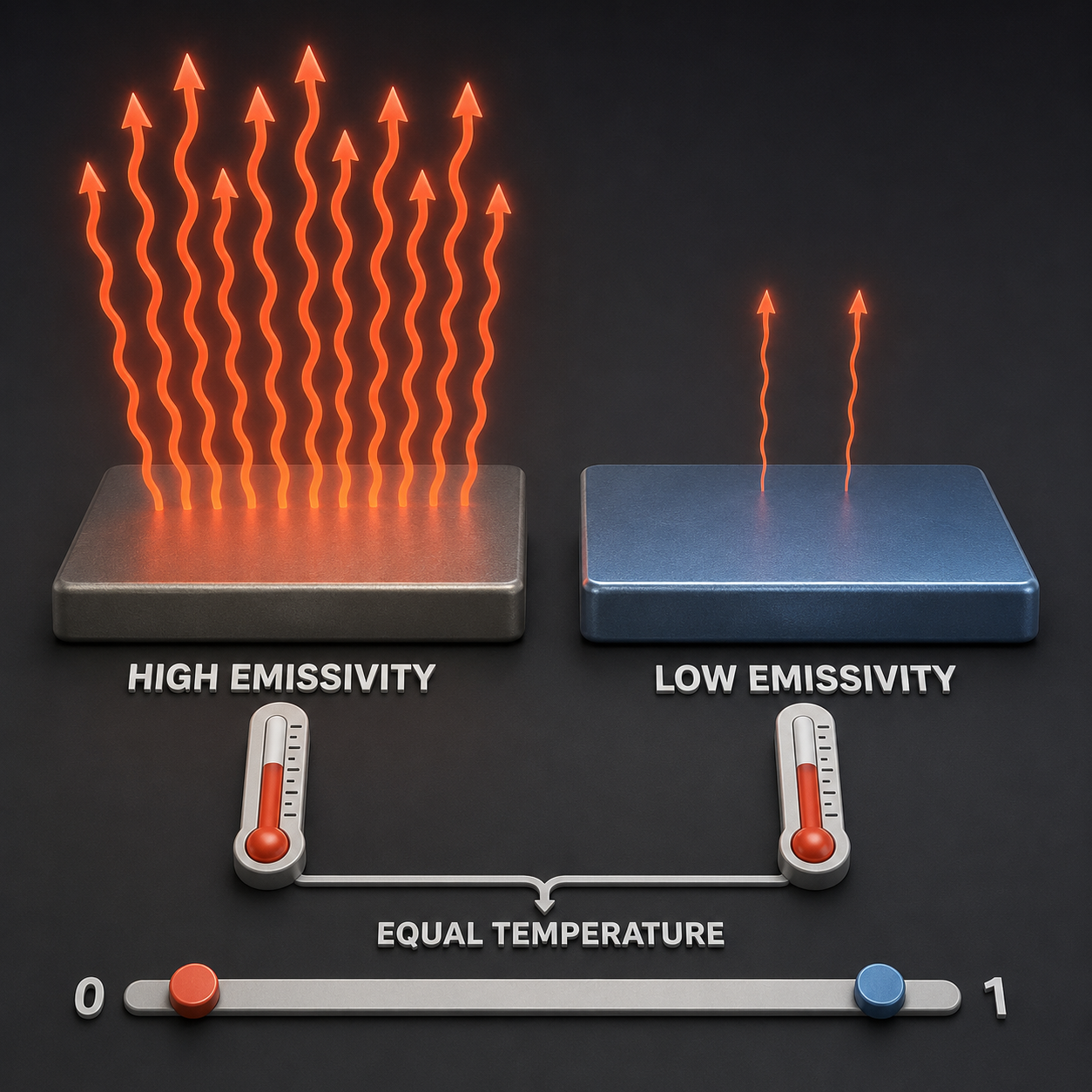
The architectural glazing industry has built an entire technology on exactly this. Low-emissivity — "low-e" — coatings are microscopically thin layers applied to glass specifically to suppress how much thermal radiation the surface emits. The principle is wavelength-targeted: the coating passes shortwave solar radiation while refusing to radiate longwave heat, changing which direction the energy budget flows without changing how the glass looks.
Direction is the operative word. For any glazing that absorbs solar energy and heats up, the surface emissivity of each face helps decide where that captured heat goes — how much radiates back outdoors, and how much radiates into the occupied space. Two systems can capture identical energy and deliver meaningfully different shares of it inward, purely on the emissivity of their interior-facing surfaces.
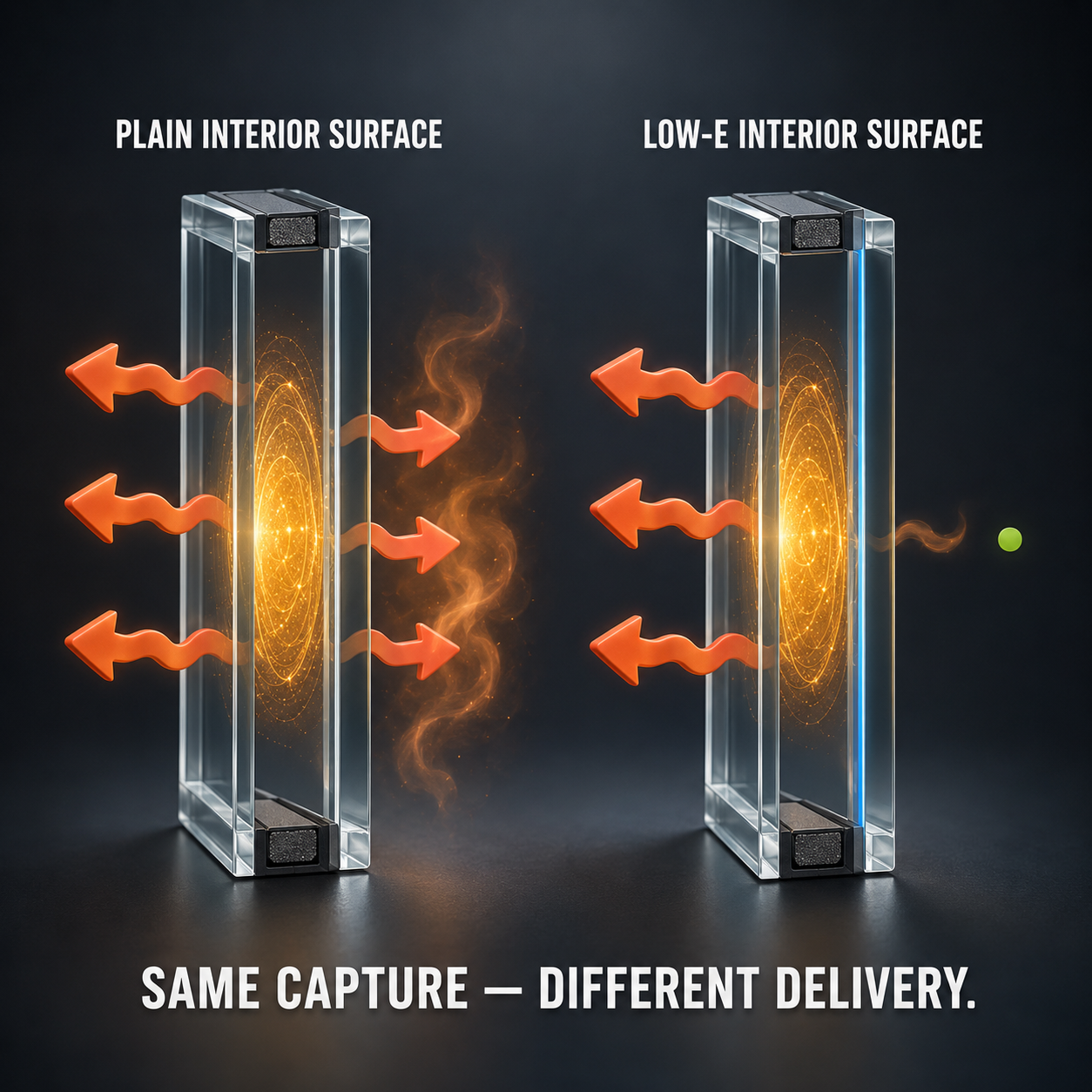
Emissivity is the quiet variable of surface physics: rarely discussed outside engineering circles, almost never disclosed in consumer-facing documents, and yet decisive in determining what absorbed energy ultimately does. It completes the absorption story — and it foreshadows a question Series 3 will raise about what performance documentation chooses to leave out.
If you're just finding this page, here's the quick context: our focus is sharing the science behind the sun's energy and how window film actually affects it. This is one chapter in an ongoing series — to see more, visit our page or give us a follow to keep window film and sun's energy facts coming to your feed.