
Transmission: Straight Through
Transmitted energy is the simplest fate to describe and the costliest to ignore: it passes through the surface entirely and delivers its full energy to whatever lies beyond.
For a vehicle, "beyond" means the interior — seats, dashboard, steering wheel, carpet. Transmitted solar energy crosses the cabin and strikes those surfaces, where the absorption event from Series 1 plays out at full scale. Interior materials are, by design and by color, excellent absorbers: dark plastics, dark leathers, and dark fabrics capture the overwhelming majority of the radiation reaching them. Each absorbing surface becomes a heated surface, and each heated surface begins radiating, conducting, and convecting its heat into the cabin air and everything nearby.
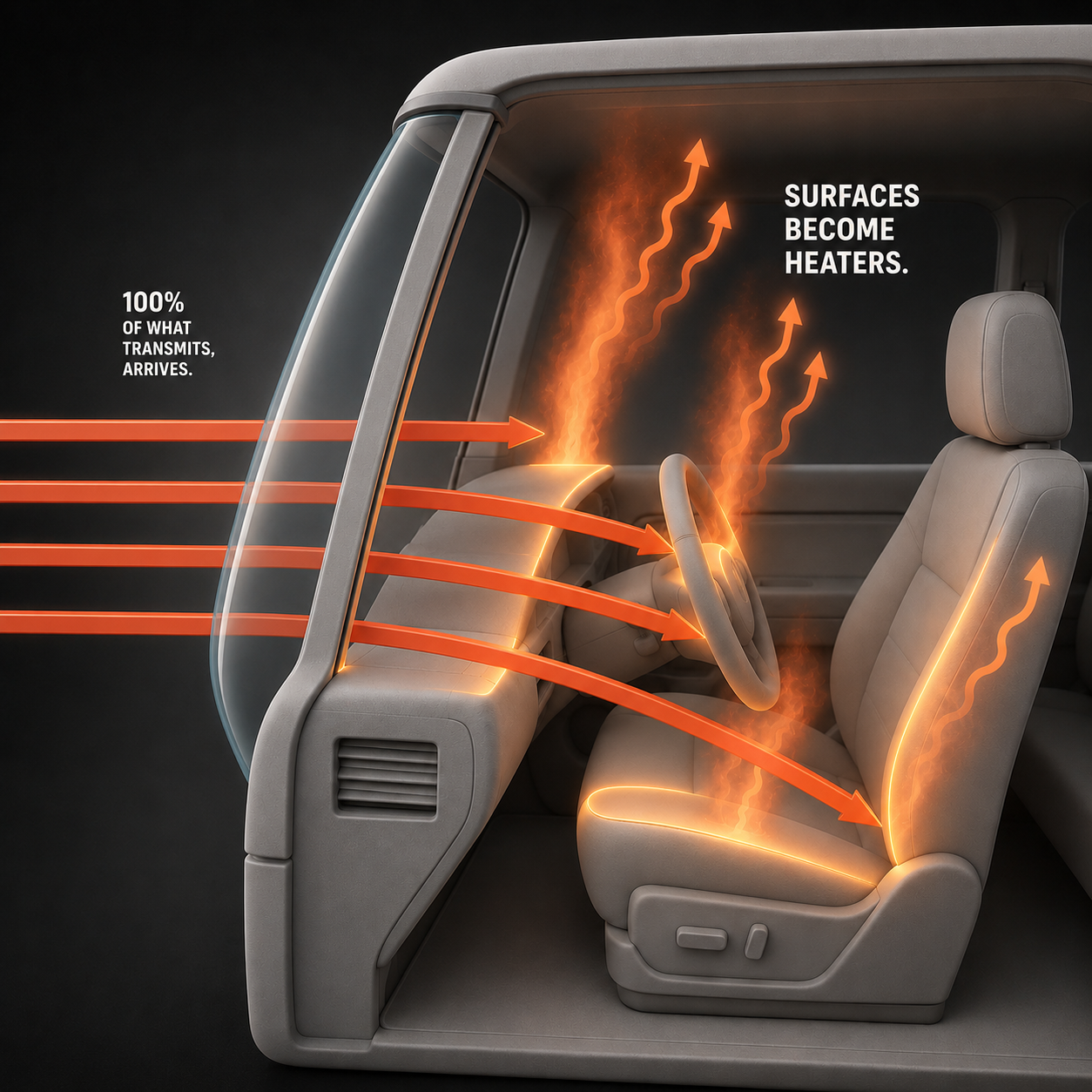
This is why the interior of a closed vehicle in sunlight becomes hotter than the outside air. Solar radiation passes through the glass and is converted to heat by interior surfaces — but the resulting heat, now carried by warmed air and re-radiated at long infrared wavelengths, does not pass back out through the glass nearly as easily as the original sunlight came in. Energy enters faster than it can leave, and the cabin climbs toward a new, higher equilibrium.
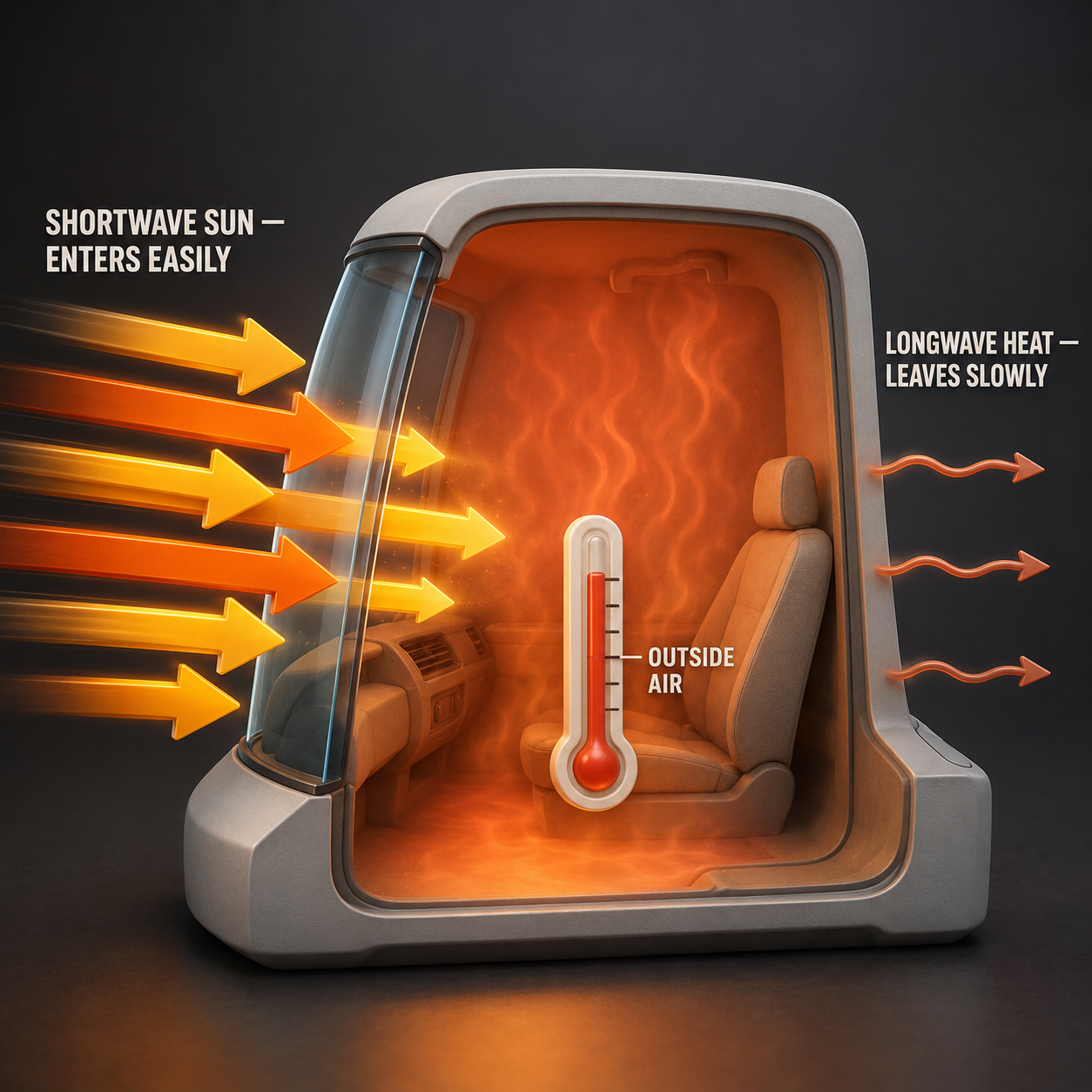
Two practical truths follow. First, transmission is the fate that solar control exists to reduce — every percentage point moved out of the transmitted column is energy that never enters the cabin's heat budget. Second, what the transmitted energy strikes matters: interior color and material genuinely change how much of the arriving radiation converts to heat, making the cabin itself a participant in its own thermal outcome.
If you're just finding this page, here's the quick context: our focus is sharing the science behind the sun's energy and how window film actually affects it. This is one chapter in an ongoing series — to see more, visit our page or give us a follow to keep window film and sun's energy facts coming to your feed.