
Absorption: The Door With a Slow Leak
Absorbed energy does not disappear. It relocates — and then it makes demands.
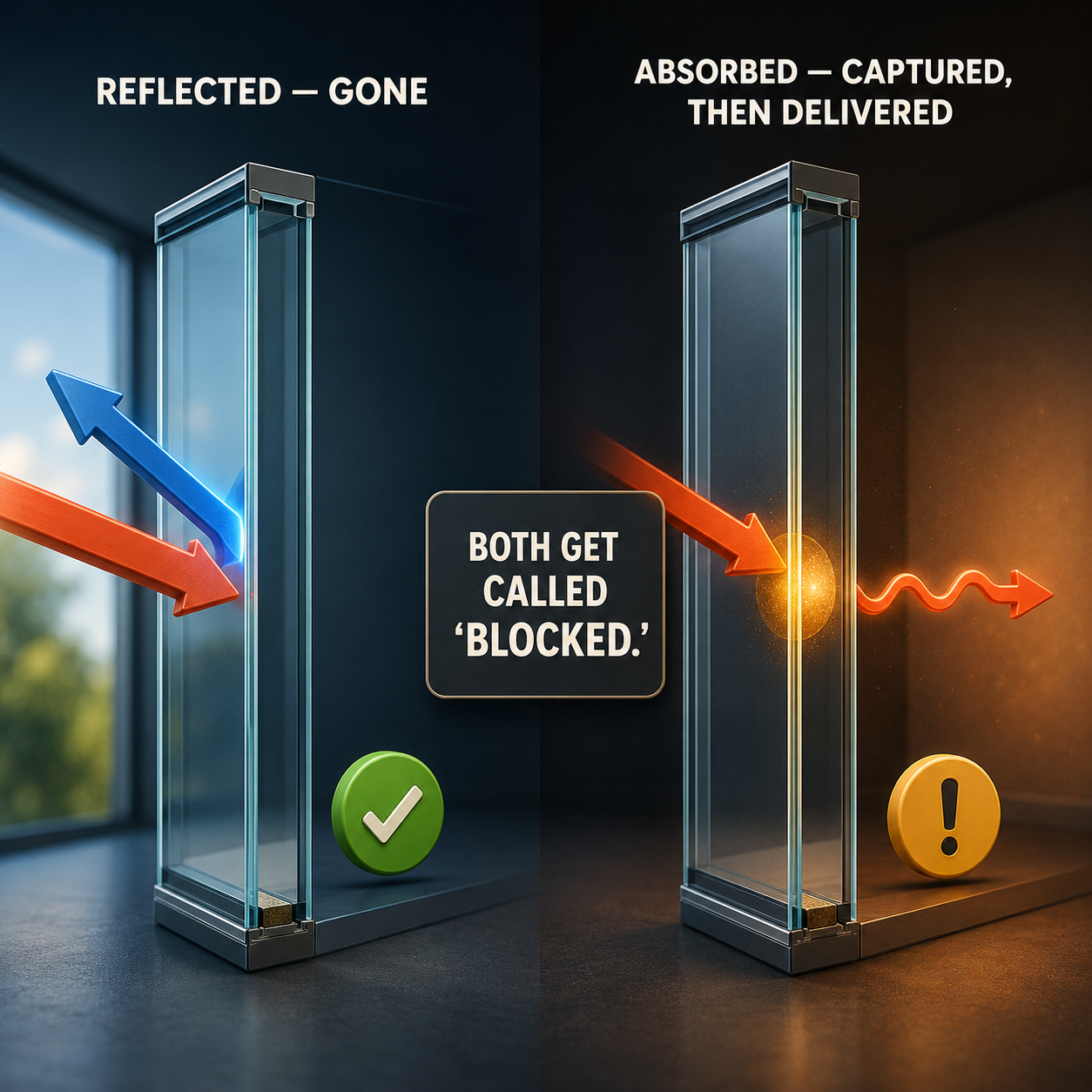
When a material absorbs solar energy, that energy becomes heat within the material itself, raising its temperature. A pane of glass absorbing solar energy becomes a heated pane of glass — and heated objects shed their heat by every channel available to them. They radiate it from both faces. They conduct it through their thickness. They hand it to the air touching their surfaces.
Critically, a heated pane sheds heat in both directions: outward toward the sky, and inward toward the interior. The interior-facing share is the complication that defines this entire fate. Energy that was "stopped" at the glass was not stopped at all — a portion of it completes the journey anyway, arriving as re-radiated heat from a warm surface rather than as direct sunlight.
The formal accounting in technical literature reflects this precisely: in the definition of total solar energy rejection, only the portion of absorbed energy that is re-radiated and conducted or convected outdoors counts as rejected. The inward share counts against the system. Absorption is never credited in full, because absorption never performs in full.
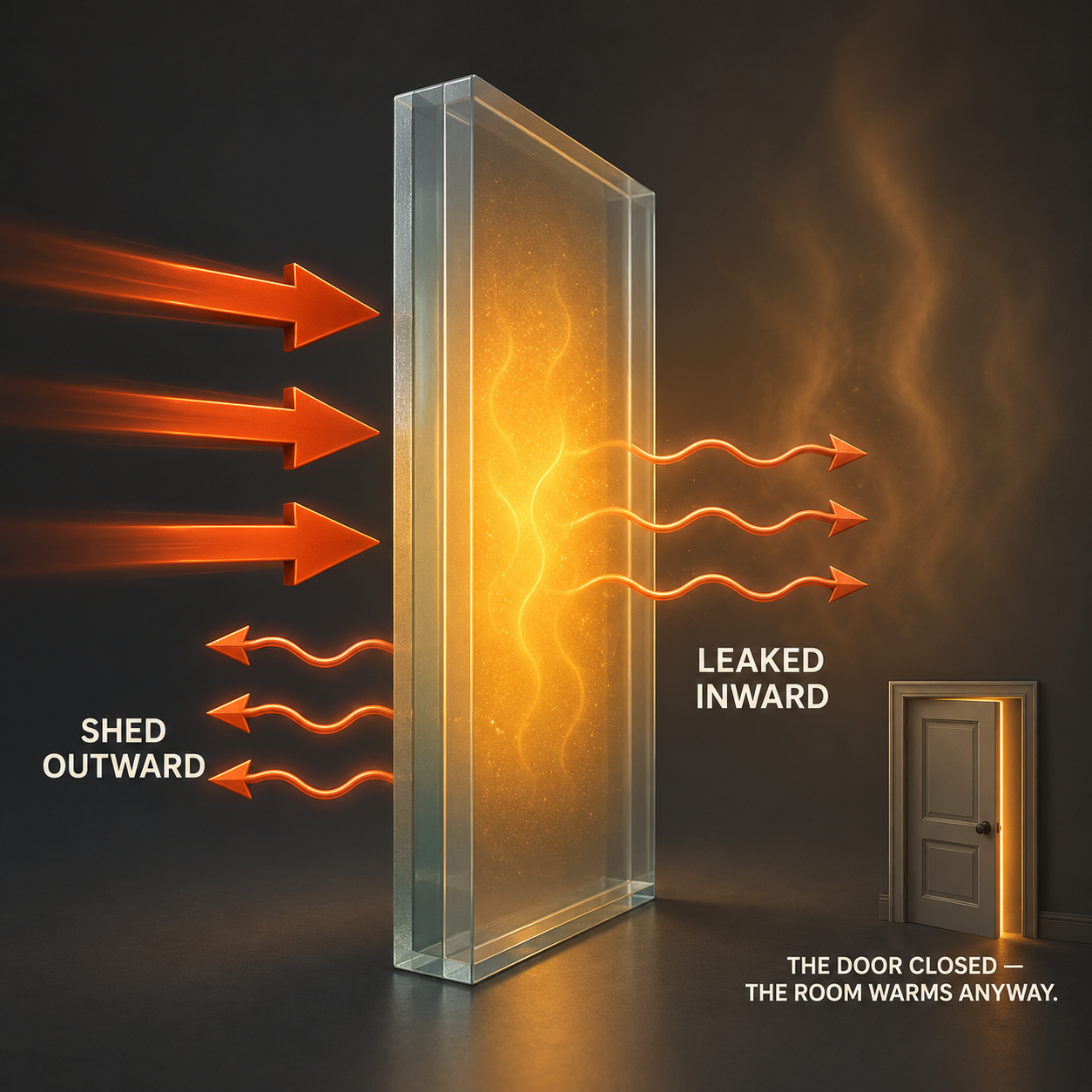
This is the door with the slow leak. The door did close — the energy did not pass through directly — but the room on the other side warms anyway. How much leaks inward depends on physics covered in the next chapters: surface temperature, emissivity, and whether moving air is available to carry the outward share away.
If you're just finding this page, here's the quick context: our focus is sharing the science behind the sun's energy and how window film actually affects it. This is one chapter in an ongoing series — to see more, visit our page or give us a follow to keep window film and sun's energy facts coming to your feed.