
Reflection: The Closed Door
Of the three fates, reflection is unique: it is the only outcome in which the energy truly leaves the system.
A reflected photon never enters the material. It deposits no energy, raises no temperature, and contributes nothing — zero — to the heat load on the far side of the surface. The energy departs in the direction it came from, and the thermal story ends there. In the formal definition of solar energy rejection found in technical and patent literature, reflectance counts toward rejection in full, with no deductions and no asterisks.
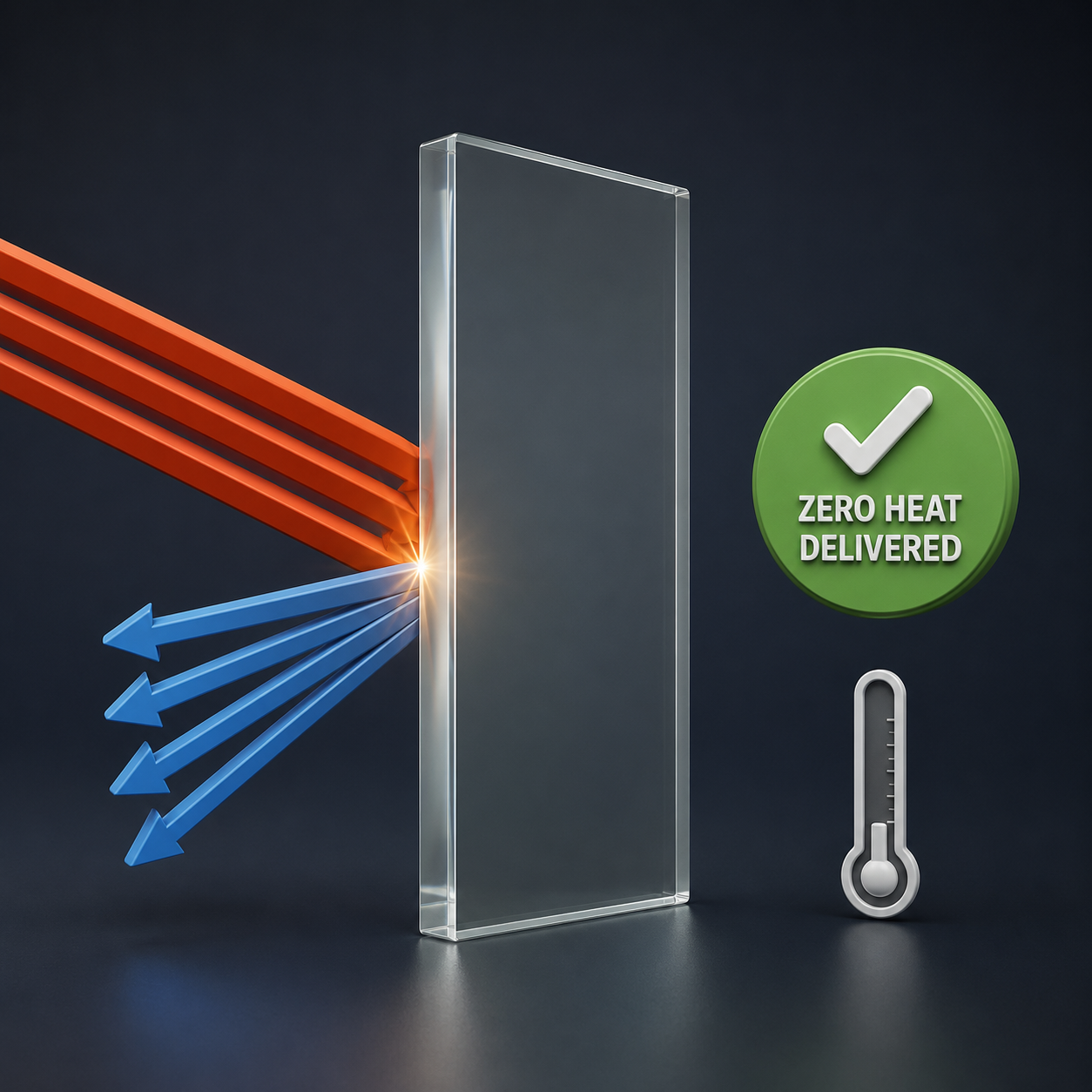
This is what makes reflection the gold standard outcome for any solar control strategy. There is no aftermath to manage, no captured energy seeking an exit, no secondary effects. A closed door.
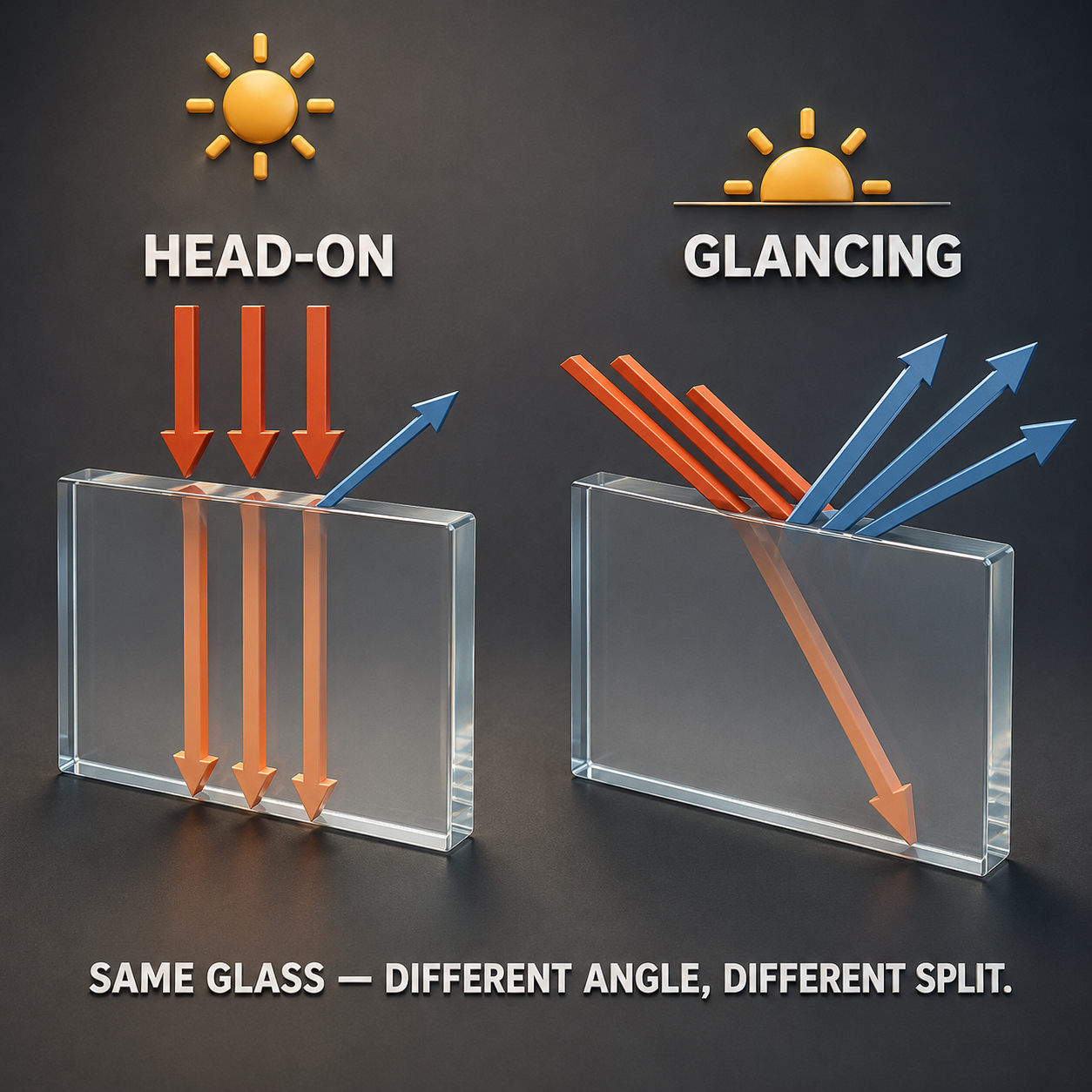
Reflection at a surface depends on the material's optical properties and varies by wavelength — which is why a surface can look transparent to the eye while reflecting strongly in bands the eye cannot see. The angle of arrival matters as well: glancing angles reflect more than head-on strikes, a behavior visible to anyone who has seen late-day sun mirror off a windshield that looked transparent at noon.
The chapters ahead will show that the other two fates both come with complications. Reflection has none. When evaluating any claim about energy being "blocked" or "rejected," the first question worth asking is the one this chapter establishes: was it reflected — or merely caught?
If you're just finding this page, here's the quick context: our focus is sharing the science behind the sun's energy and how window film actually affects it. This is one chapter in an ongoing series — to see more, visit our page or give us a follow to keep window film and sun's energy facts coming to your feed.