
The Three Fates: Reflect, Absorb, Transmit
When solar energy reaches any surface — glass included — every photon meets one of exactly three fates. There is no fourth option, and the ratio between the three determines everything about how much heat ends up on the far side.
Reflection. The energy bounces off the surface and departs. It never enters the material at all.
Absorption. The energy is captured within the material itself, converting to heat inside it — the same absorption event described in Series 1, happening inside the thickness of the glass rather than on a dashboard.
Transmission. The energy passes through the material entirely and continues to whatever lies beyond.
Every glazing system has a signature ratio of these three outcomes, and the ratio is wavelength-dependent: a material can transmit visible light freely while absorbing infrared heavily, or reflect one band while passing another. This wavelength selectivity is what makes the entire field of solar control possible.
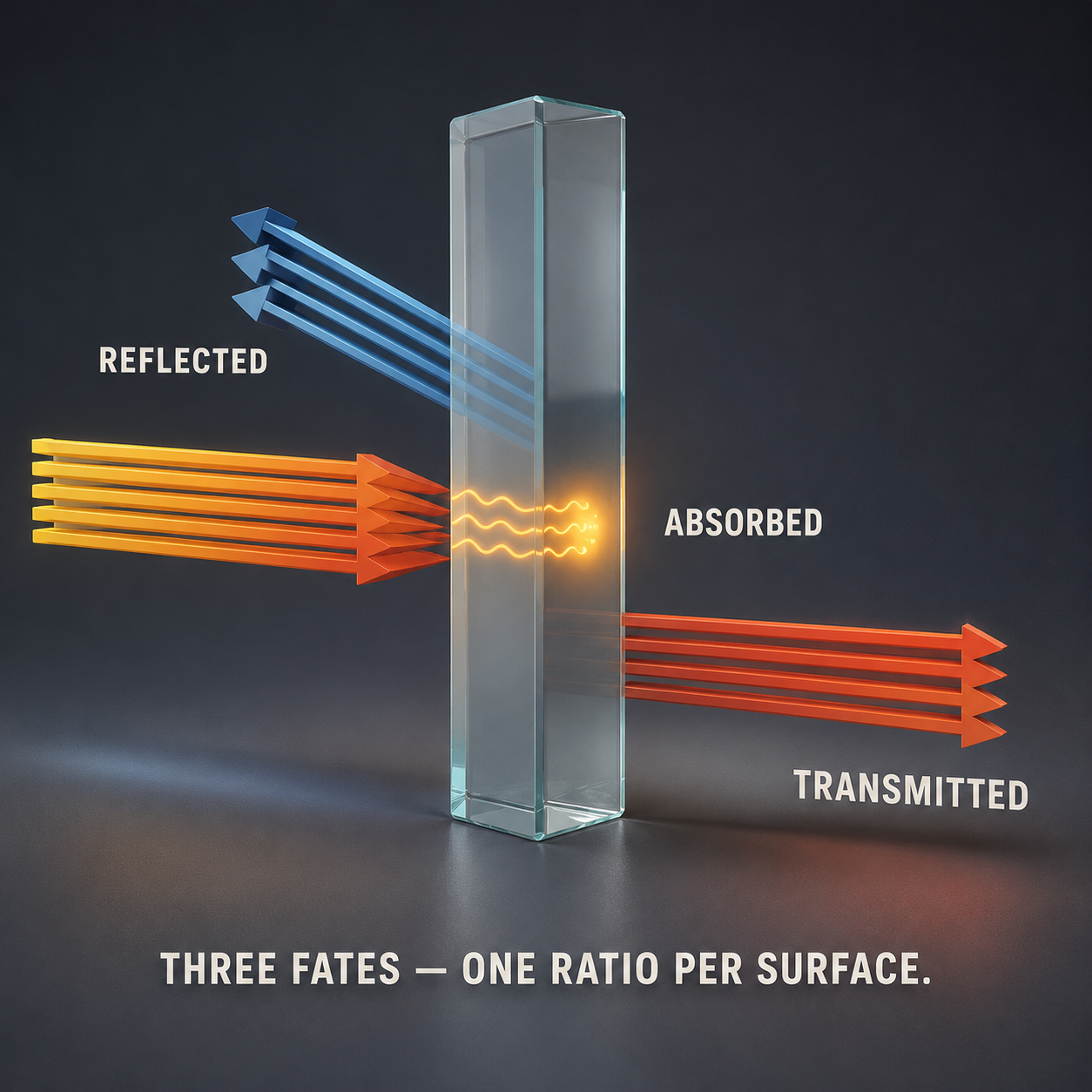
For bare automotive glass, transmission dominates — glass is not naturally very reflective, and most of the solar energy striking it continues straight through into the space beyond. That dominance is the baseline condition every solar control strategy exists to change.
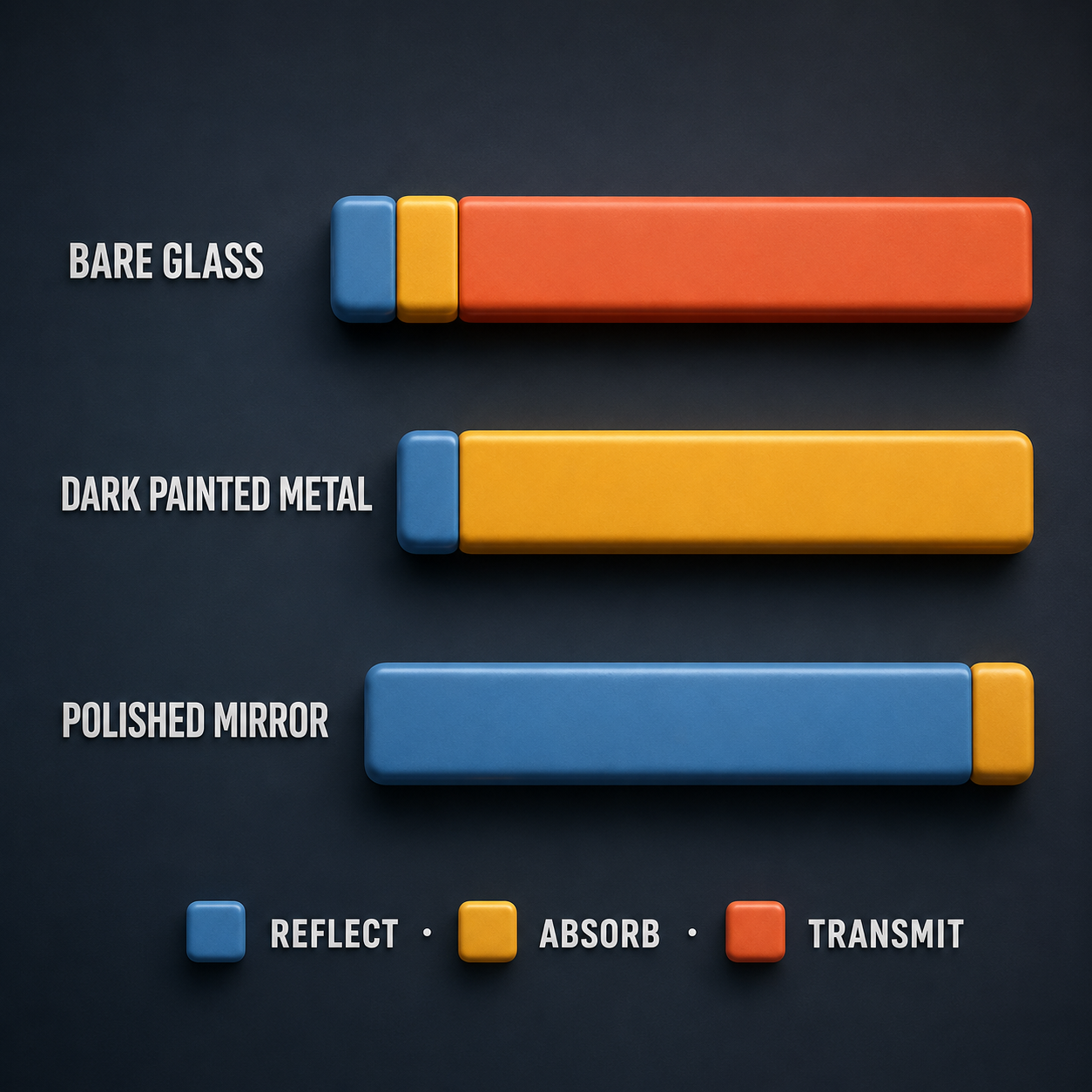
The next three chapters take each fate in turn, because the three are not equal — and the differences between them are where every honest and dishonest performance claim in the industry ultimately lives.
If you're just finding this page, here's the quick context: our focus is sharing the science behind the sun's energy and how window film actually affects it. This is one chapter in an ongoing series — to see more, visit our page or give us a follow to keep window film and sun's energy facts coming to your feed.