
Most Window Film Does Nothing for Winter Heat Loss — and the Wrong Film Makes It Worse
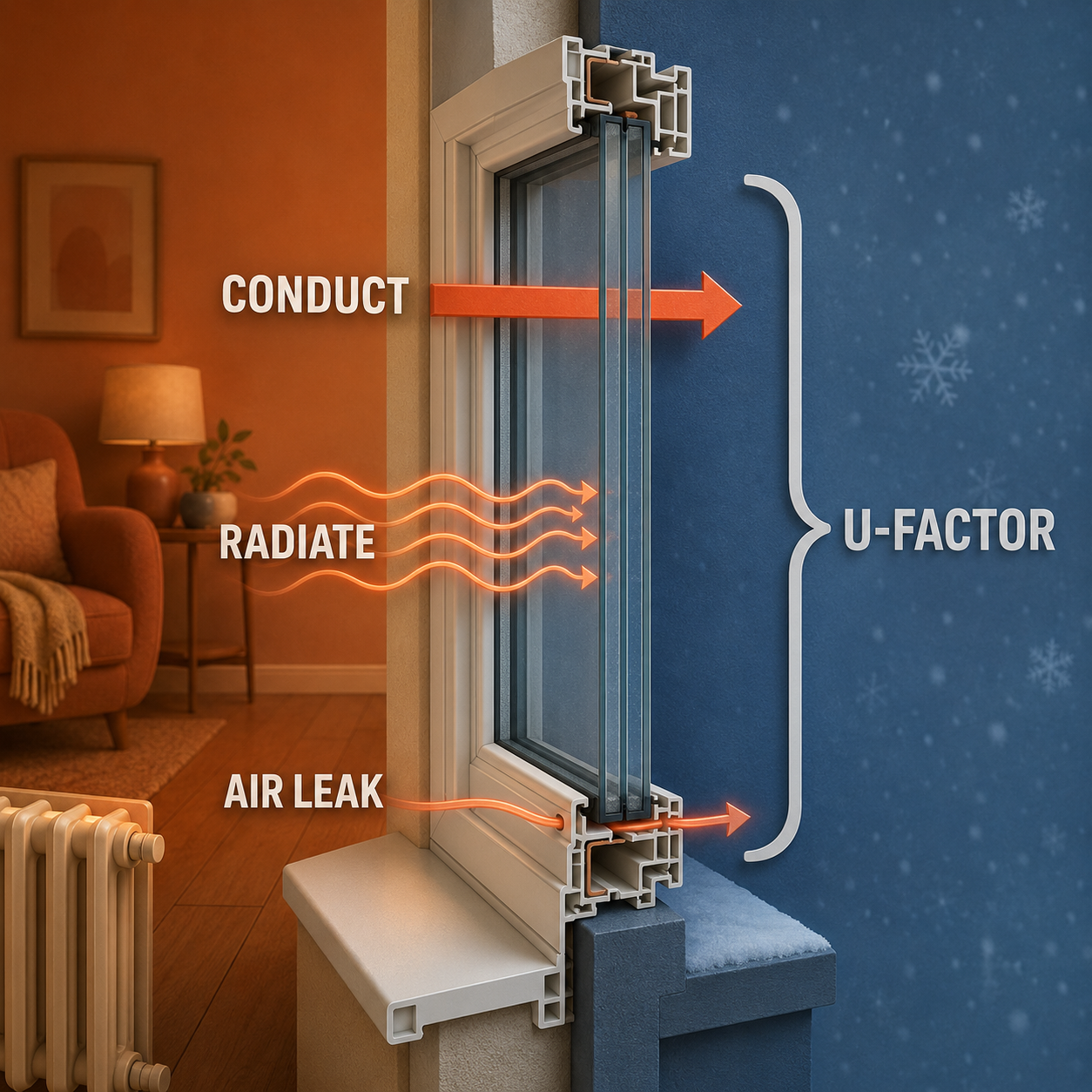
When it's cold out, the heat escaping through your windows isn't "solar" anything. It's the warmth your furnace already made — conducting through the glass, radiating off your warm walls and furniture toward the cold pane, and leaking out through the gaps around the frame. The number that describes all of that is U-factor: the rate a window transmits non-solar heat flow. Not "heat rejection." Nothing with the word rejection in it. That's the first place winter pitches go sideways — they reach for a summer word to describe a winter problem.
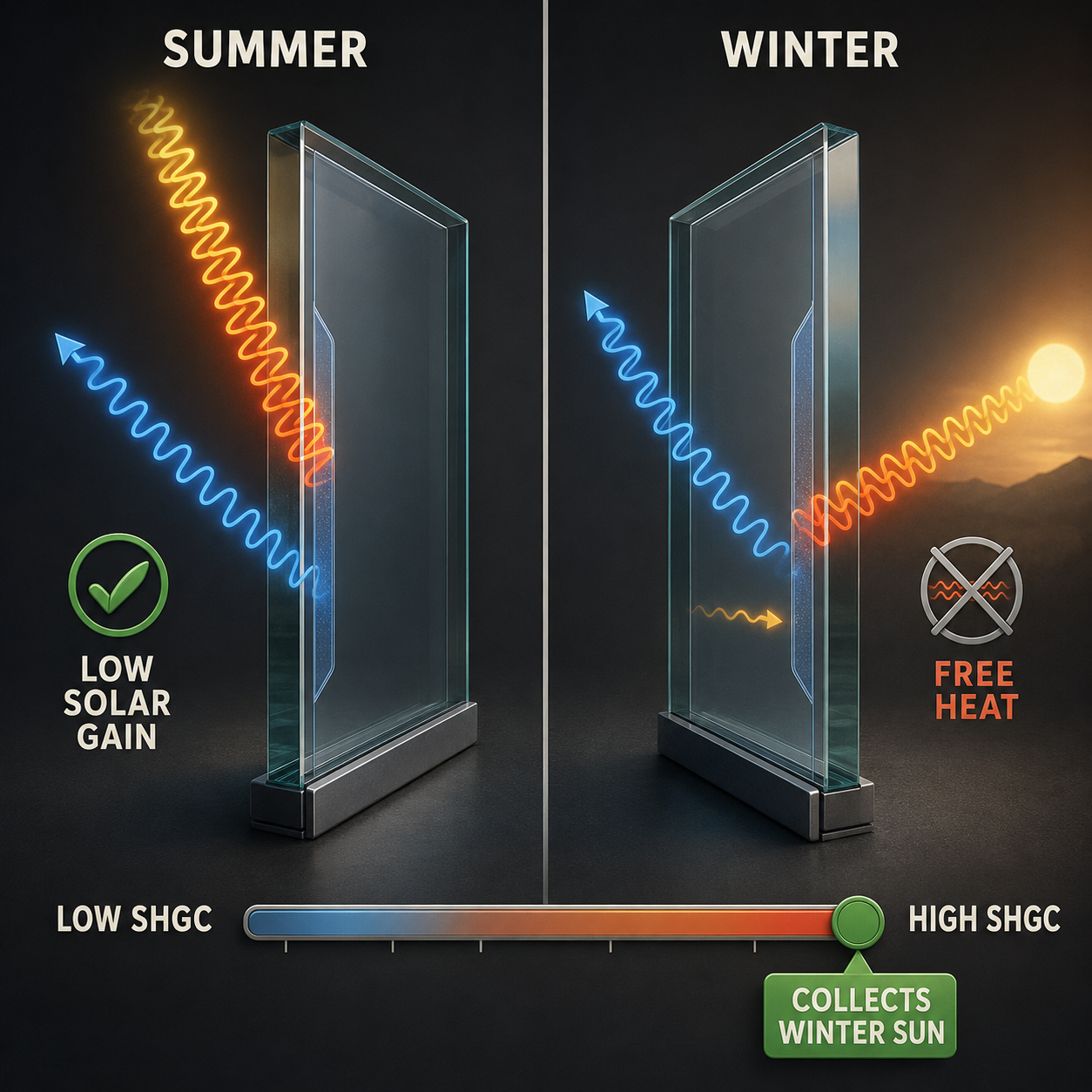
Here's the part the marketing tends to skip, and you don't have to take our word for it, because it comes straight from the U.S. Department of Energy, which is selling you nothing. Standard solar-control film is a summer tool. It's engineered to lower solar heat gain, and DOE recommends it specifically for climates with long cooling seasons — precisely because that same film also blocks the sun's warmth in winter. In a heating climate, a low-gain film spends January rejecting the free solar heating you actually want. DOE's own ratings guidance is blunt about the flip side of that coin: a higher solar heat gain coefficient is what helps collect solar heat in winter. So the very property that makes a film "good" in summer is the property working against you in the cold.
So what genuinely moves the needle on winter heat loss? Three things, none of them the film most people picture. First, air sealing — the gaps around the frame are a major escape route, and caulk and weatherstripping are the cheapest energy you'll ever save. Second, the glazing assembly's U-factor: the panes, the gas fill, the spacers, the low-e coatings on the glass itself. That's the real workhorse, and ordinary film barely touches it. Third, interior layers — lined drapes, cellular shades, interior storm panels. DOE notes that conventional draperies, simply closed at night, can cut heat loss from a warm room by up to about 10%.
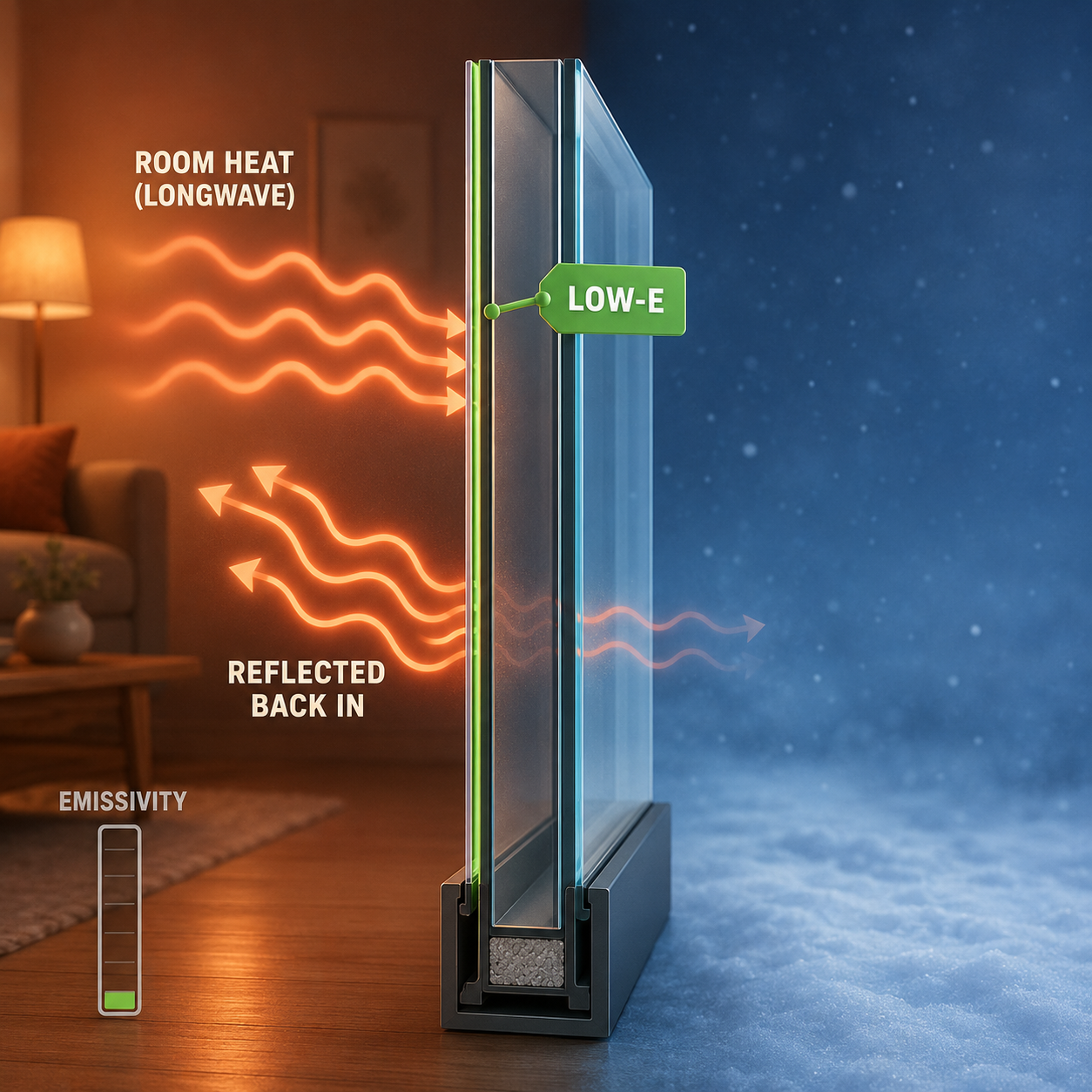
There is exactly one film that earns a place on that list, and it's not the one you're thinking of: low-e film. It's the only window film that acts on actual thermal energy instead of sunlight. It lowers the emissivity of the inside glass surface, so the longwave heat radiating off your warm room gets reflected back inside instead of dumped into the cold pane. DOE specifically lists low-e films as able to reduce winter heat loss and improve comfort. It's a real effect — modest, and a completely different product from the solar-control film people mean when they say "window film."
One more thing worth knowing, also from DOE: primarily absorptive (tinted) films can damage the seals on insulated glass units, and most window manufacturers will void the warranty if you film an IGU. Keep that in mind before anyone pitches you "winter performance" on a unit that's still under warranty.
The point isn't that film is bad. It's that you match the tool to the physics. Winter heat loss is a U-factor and air-sealing problem. If someone's selling you film as a winter heat-loss fix, ask one question: is this a low-e film, and what's its emissivity? If the answer gets vague, you're being sold a summer product for a winter problem.
New here? Window Film Facts breaks down the physics of the sun's energy and what window film actually does with it — no hype, just the science. Learn it one chapter a day by email, and if there's something we haven't covered yet, ask us your question.