Reading a Product Line Like a Scientist
A manufacturer's full product line contains diagnostic information no single spec sheet reveals. Two readable patterns turn a brochure into an instrument — the practical payoff of this entire series.
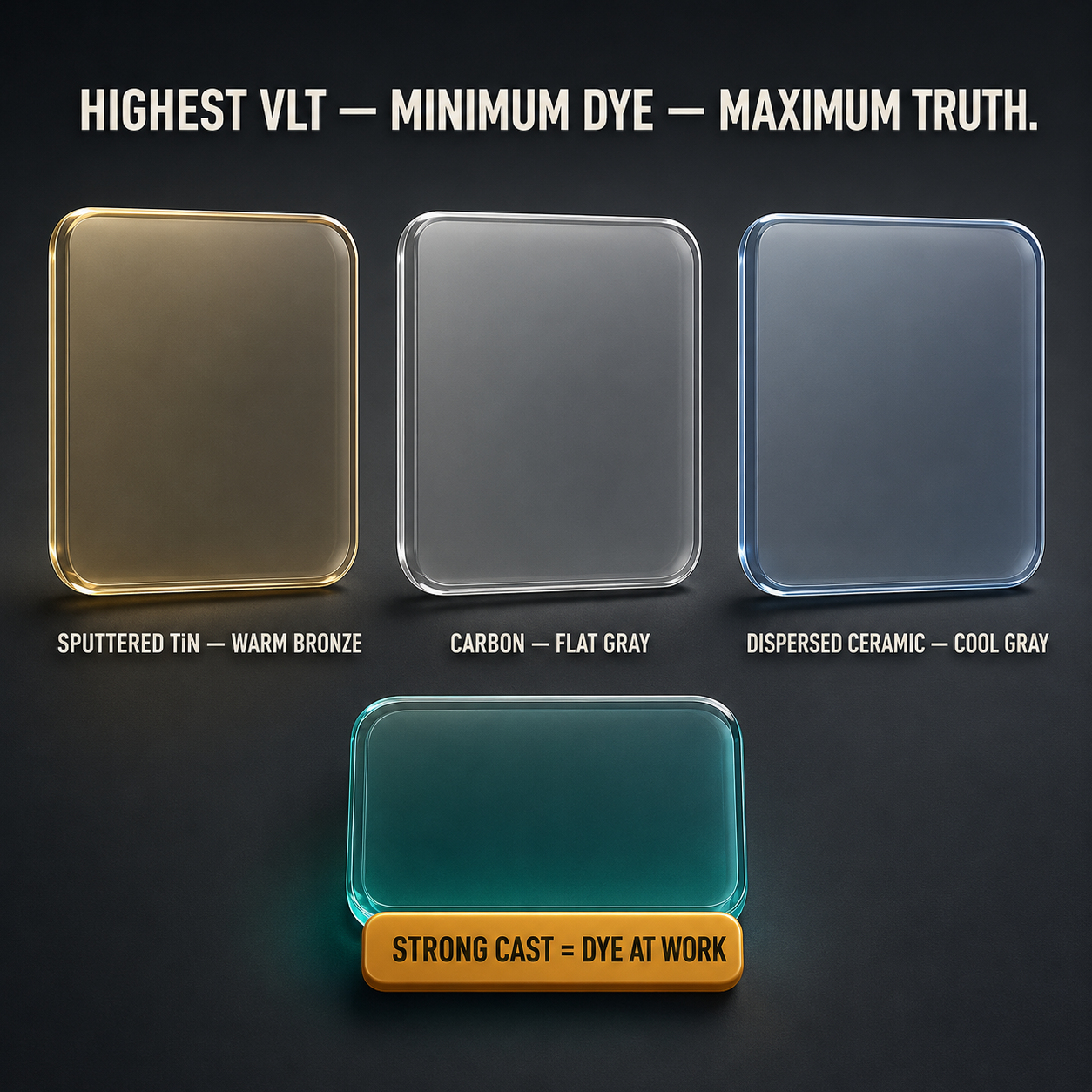
Diagnostic one: the color at highest VLT. The lightest film in a product line carries the least dye, which means it displays the functional layer's natural color most honestly. The documented signatures: sputtered TiN reads as a subtle warm bronze-gold — the material's own optical color from Chapter 4.5. Carbon reads neutral to cool flat gray. Particle-dispersed ceramics read neutral to slightly blue-gray, with some particle-size-dependent scattering character. A high-VLT film wearing a strong green or blue cast is almost certainly displaying dye, not material — a tinted answer to a question the functional layer should have answered itself.
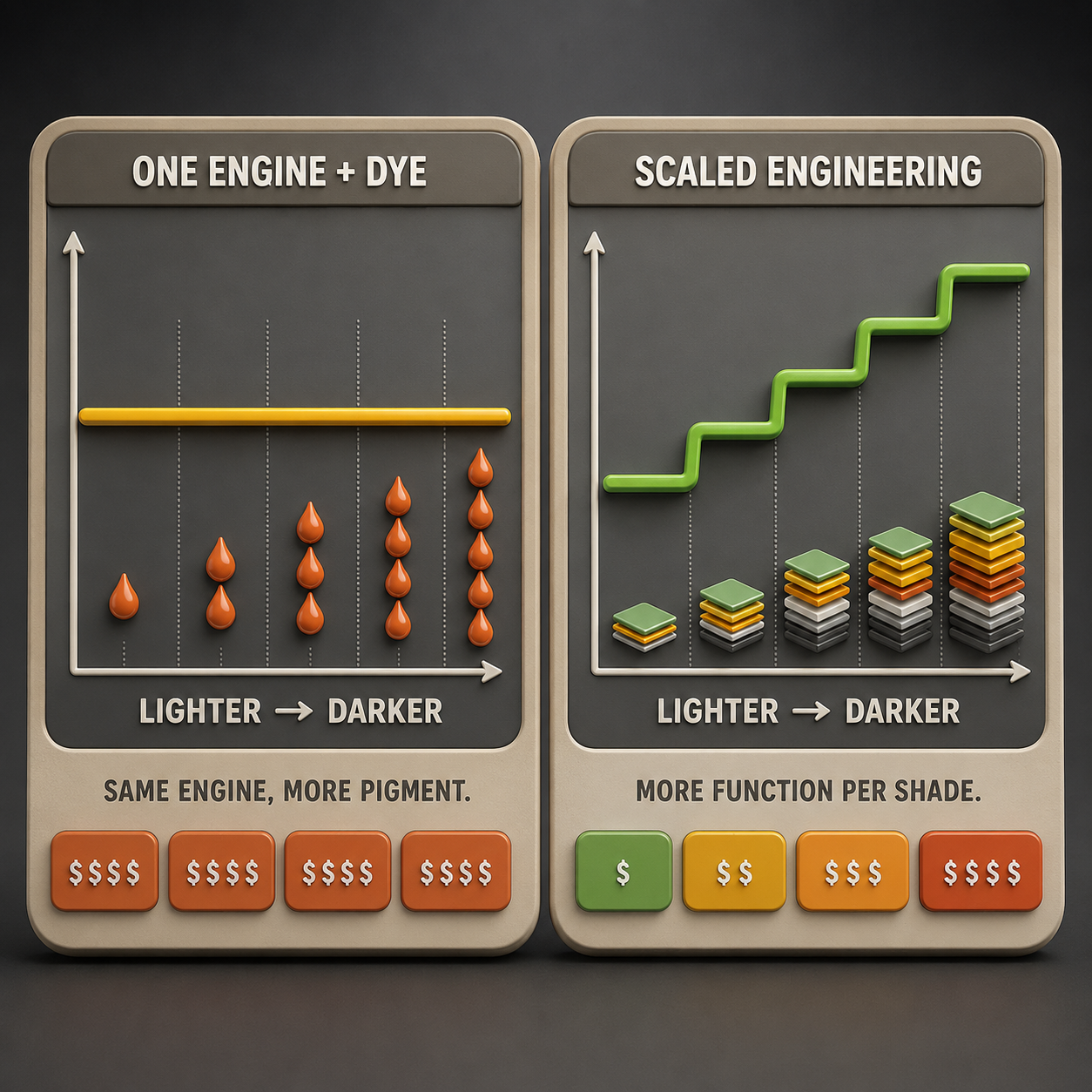
Diagnostic two: infrared performance across the VLT range. If a line's published IR rejection holds constant from its lightest shade to its darkest, the most parsimonious explanation is that one fixed functional layer runs through the entire line, with dye alone doing the darkening. The darker products are not "more ceramic" — they are the same engine wearing more pigment. If, instead, IR rejection climbs as VLT falls, the manufacturer is scaling the functional layer shade by shade: genuine engineering across the line, and the costlier approach. Flat pricing across a line's VLT range corroborates the dye-darkening reading; climbing prices corroborate scaled engineering.
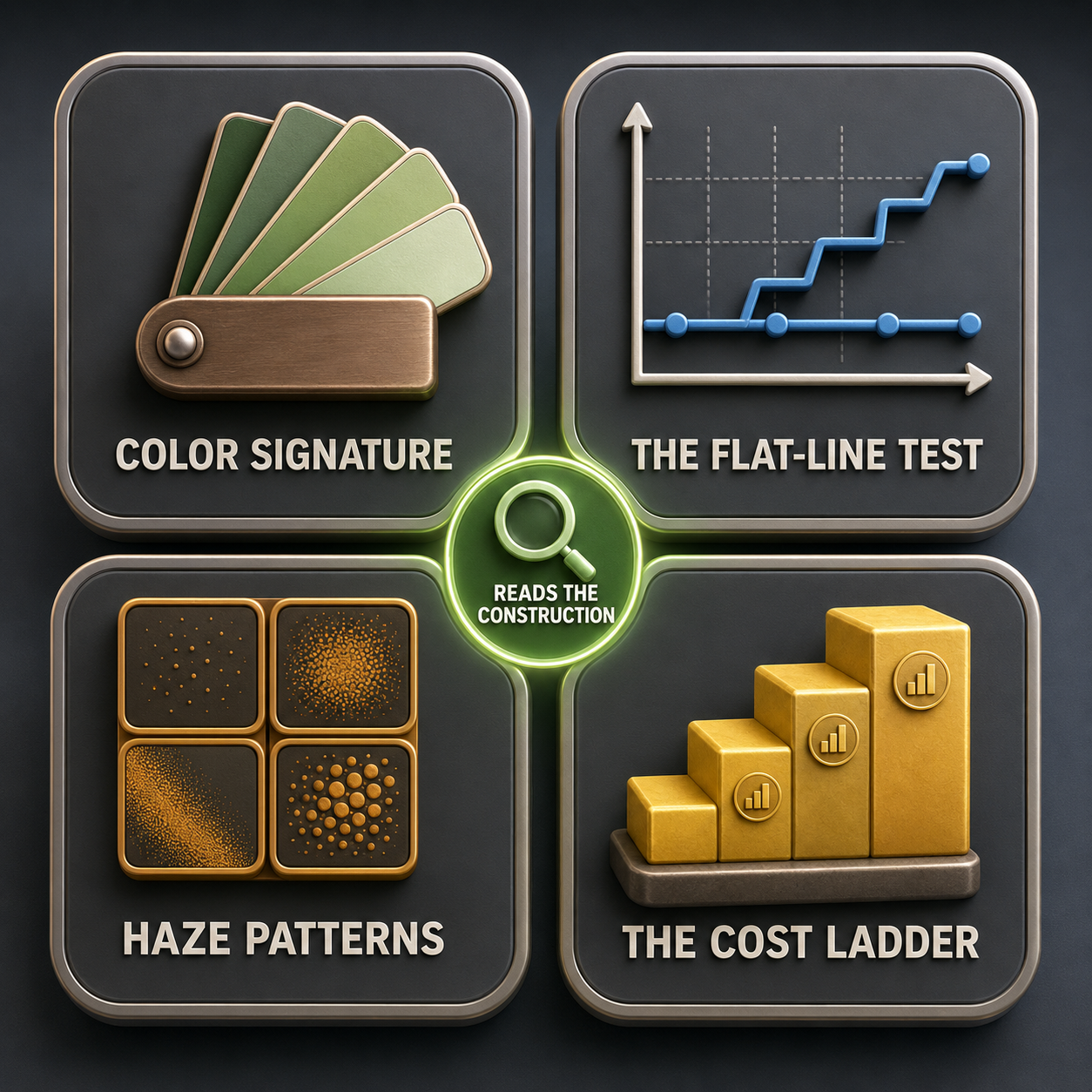
Neither diagnostic requires a laboratory. Both read from published numbers and a sample book — and together with the haze signatures of Chapter 4.10 and the cost ladder of 4.11, they equip a buyer to see through the one thing this series has shown the industry never discloses voluntarily: the construction.
A reader holding Series 3's checklist and this chapter's diagnostics is the fully equipped consumer this catalog exists to create. What remains is proof by direct measurement — the subject of Series 5.
If you're just finding this page, here's the quick context: our focus is sharing the science behind the sun's energy and how window film actually affects it. This is one chapter in an ongoing series — to see more, visit our page or give us a follow to keep window film and sun's energy facts coming to your feed.