Reading a Spec Sheet Honestly
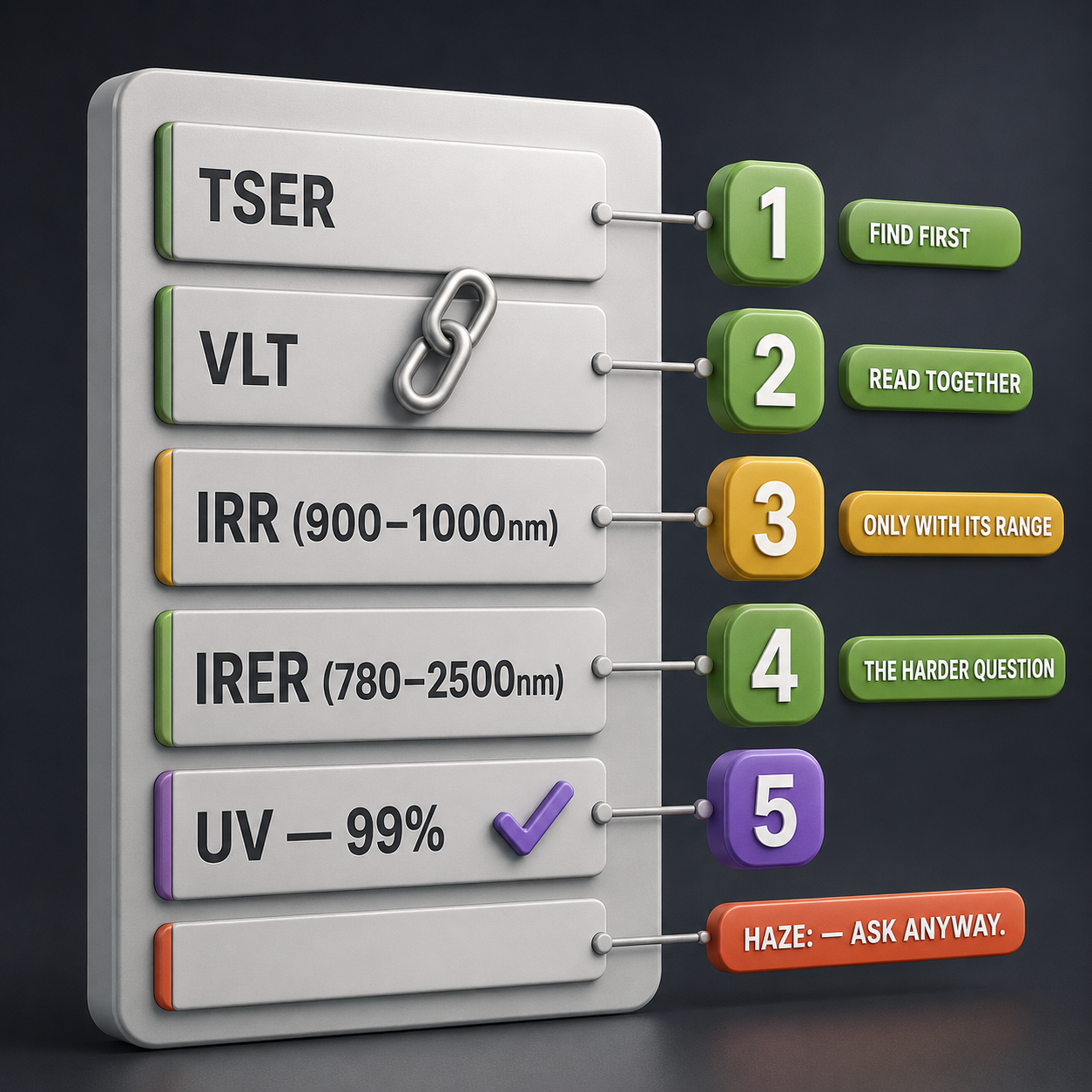
Everything in this series compresses into a working method for reading any specification sheet. The checklist, in order:
Find TSER first. It is the only number scoped to the full solar budget with the inward leak charged. Its absence from a sheet that prominently displays IRR is itself information about what the document was built to communicate.
Read TSER against its VLT — always. The ceiling is a curve: rejection is cheap at dark shades and hard-won at clear ones. The published reference curve — roughly 34% TSER at 86% VLT through 62% at 20% VLT — gives any TSER/VLT pair its context. A figure dramatically above that curve at its stated VLT warrants scrutiny, not excitement.
Accept IRR only with its range. The published gold standard pairs the number with its window explicitly — "measured from 900 to 1,000 nanometers." Range disclosed, the number can be read for what it is: a narrow-band measurement. Range absent, it is decoration.
Prefer IRER where published. Full band, energy-weighted, inward leak charged, per its published definition. Brands printing it are voluntarily answering the harder question — behavior worth rewarding.
Check UV rejection as its own line. Quality documentation lists it separately, typically at 99%+ — among the most reliable claims on any sheet.
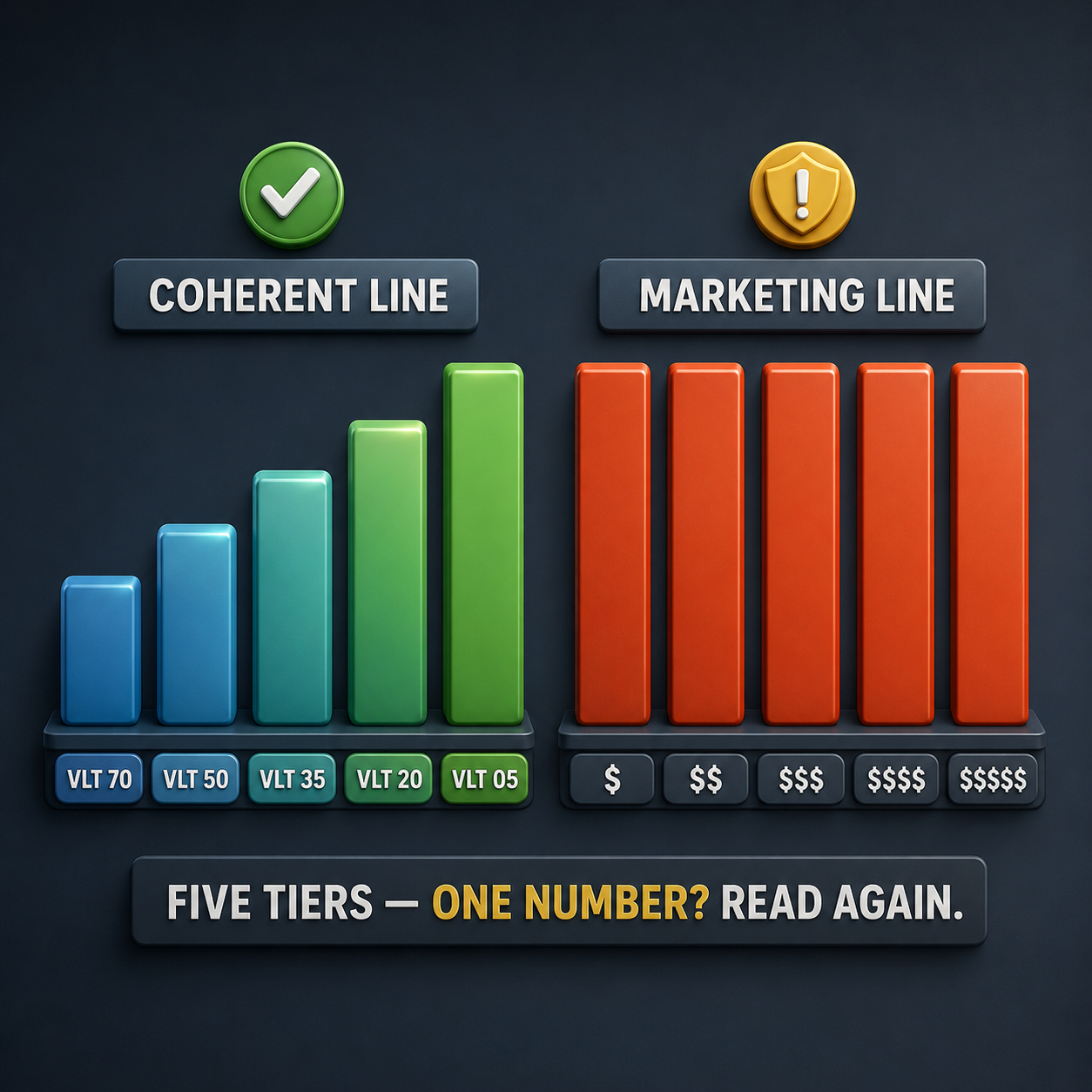
Read the product line, not just the product. Within an honest line, numbers move coherently: TSER climbs as VLT falls and tiers ascend. A line where every product posts the same spectacular figure regardless of tier or price is publishing a marketing decision, not a measurement.
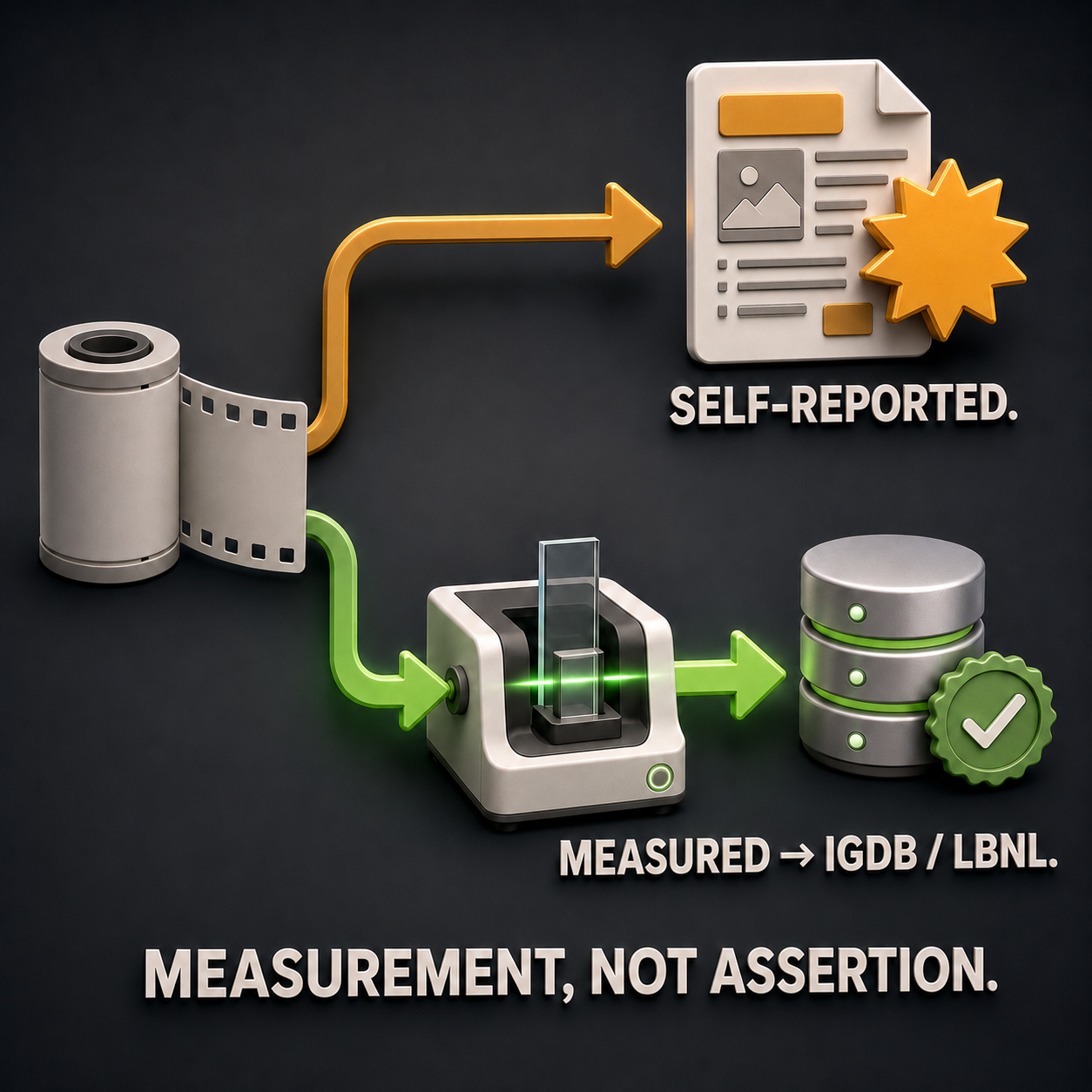
Know the independent pathway. Beyond self-reported sheets, the industry-standard verification route is spectrophotometric data in the International Glazing Database, processed through the Lawrence Berkeley National Laboratory toolchain — measurement, not assertion.
A reader holding this checklist cannot be sold a slice as a total. That reader is who this series was written to create.
If you're just finding this page, here's the quick context: our focus is sharing the science behind the sun's energy and how window film actually affects it. This is one chapter in an ongoing series — to see more, visit our page or give us a follow to keep window film and sun's energy facts coming to your feed.