
ASTM G173: The Agreed-Upon Shape of Sunlight
Every legitimate measurement in solar performance traces back to one document: ASTM G173, the standard tables for reference solar spectral irradiance.
ASTM G173 defines, wavelength by wavelength, how much solar energy arrives at Earth's surface under standardized clear-sky conditions — the agreed-upon shape of sunlight. The tables specify energy at fine wavelength intervals across the full solar range, generated from an atmospheric model under defined reference conditions, with an integrated hemispherical irradiance of approximately 1,000 watts per square meter.
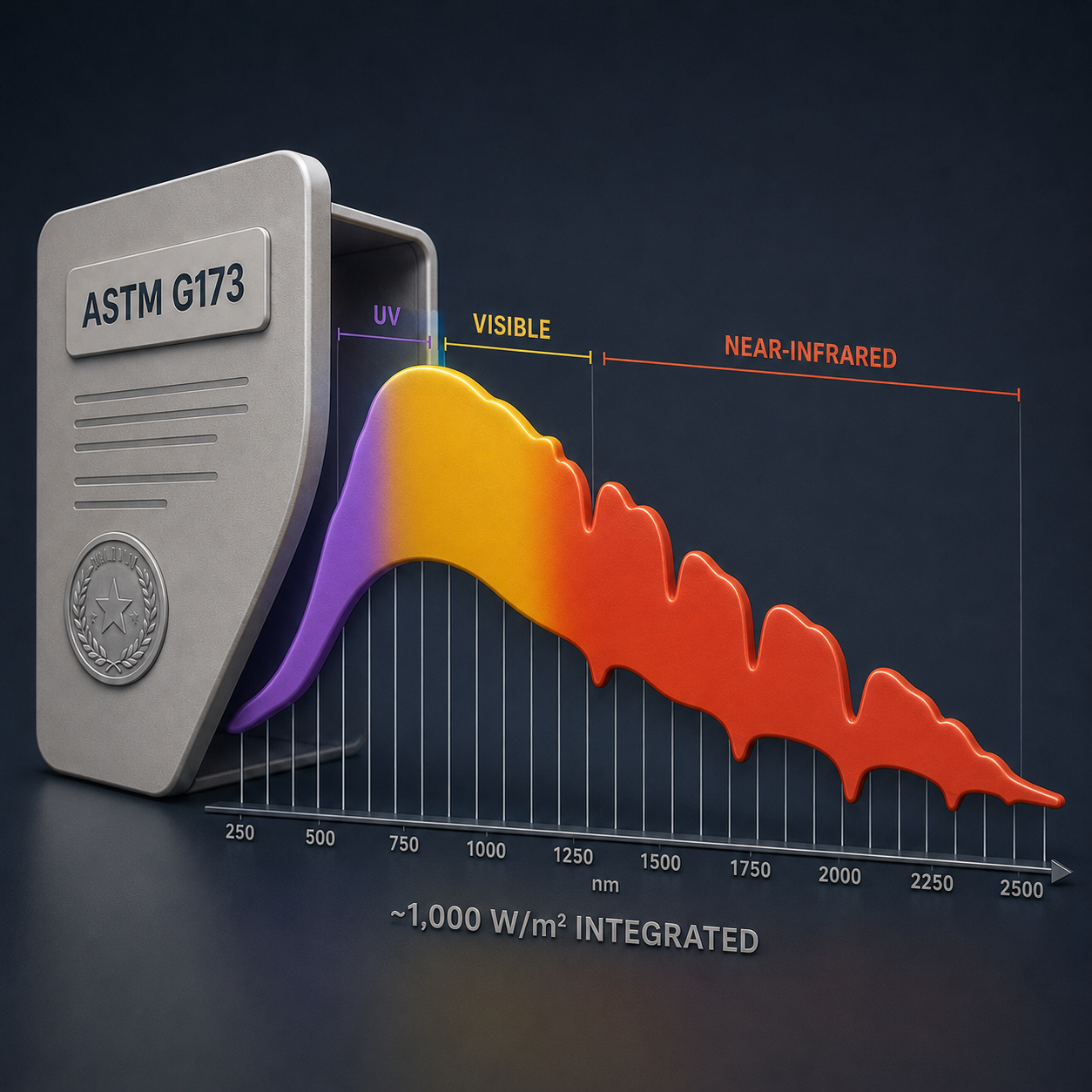
The standard exists because solar-weighted properties cannot be calculated without it. As the standard itself establishes, the absorptance, reflectance, and transmittance of solar energy are functions of wavelength — which means the spectral distribution of solar flux must be known before any solar-weighted property can be computed. Every energy-weighted performance number in glazing and film measurement is an integration against this reference curve.
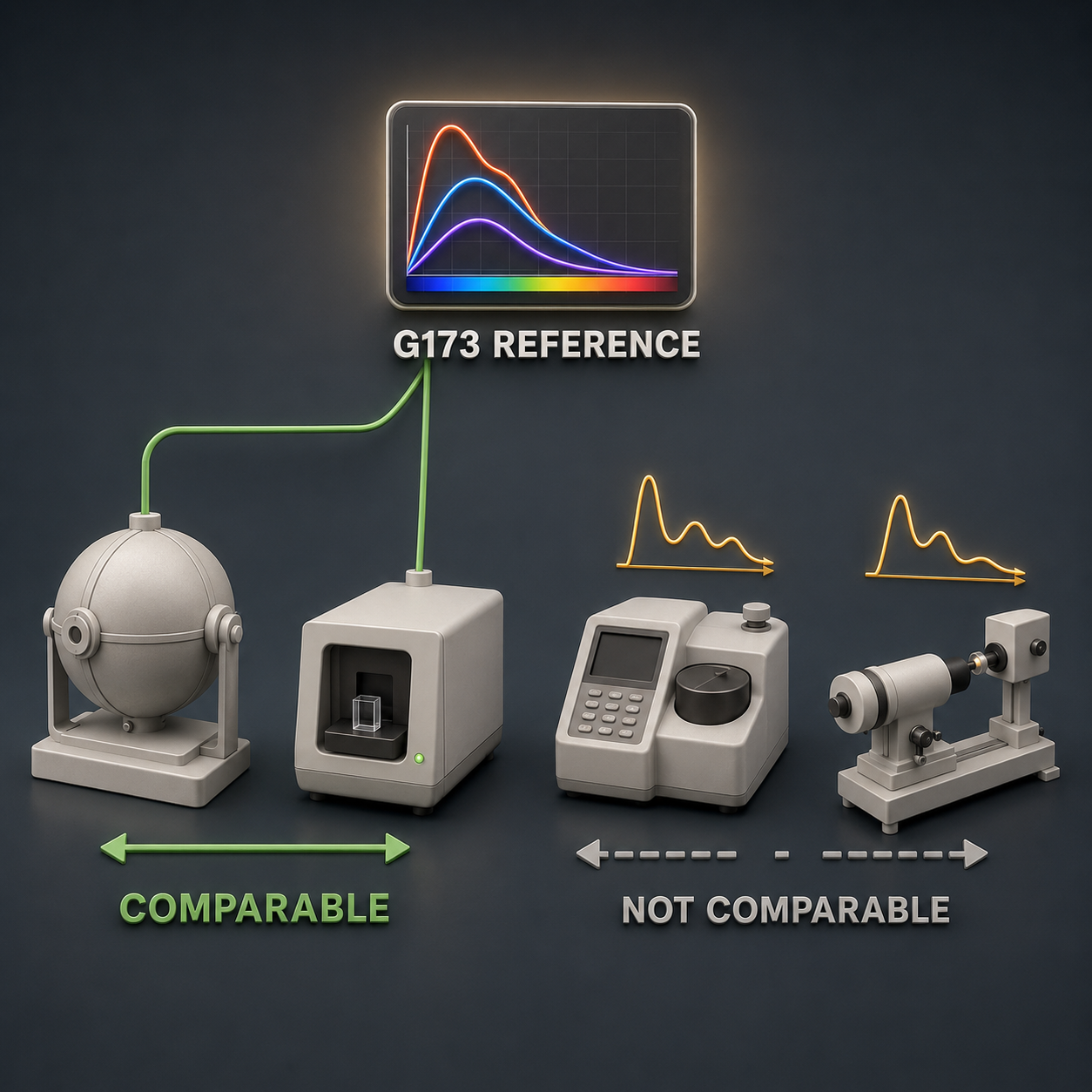
ASTM G173 is also the great equalizer. Two laboratories measuring the same product against the same reference spectrum produce comparable results. Measurements made against no disclosed standard are comparable to nothing.
This chapter closes Series 1 with the tool that makes every later series possible. The energy story is now complete: what solar energy is, how the atmosphere filters it, where it lives across three bands, how unevenly it is distributed — and the standard that pins all of it down. What happens when that energy reaches a surface is the next story.
If you're just finding this page, here's the quick context: our focus is sharing the science behind the sun's energy and how window film actually affects it. This is one chapter in an ongoing series — to see more, visit our page or give us a follow to keep window film and sun's energy facts coming to your feed.