
Visible Light Is Not Free Energy
The most consistently ignored fact in solar performance conversations: visible light becomes heat.
The mechanism is the same absorption event described in Chapter 1.2. A photon strikes a material; if absorbed, its energy becomes molecular vibration — heat. Nothing about that mechanism checks the photon's wavelength first. A dark dashboard absorbing a visible-light photon heats up exactly as it does when absorbing an infrared photon. The dashboard does not discriminate. Absorbed energy is absorbed energy.
The scale of the omission is what makes it serious. Visible light carries roughly 42–44% of the solar energy arriving at the surface — nearly half the entire budget. Any conversation that treats "heat" as a synonym for "infrared" has silently excluded almost half of the energy actually heating the space.
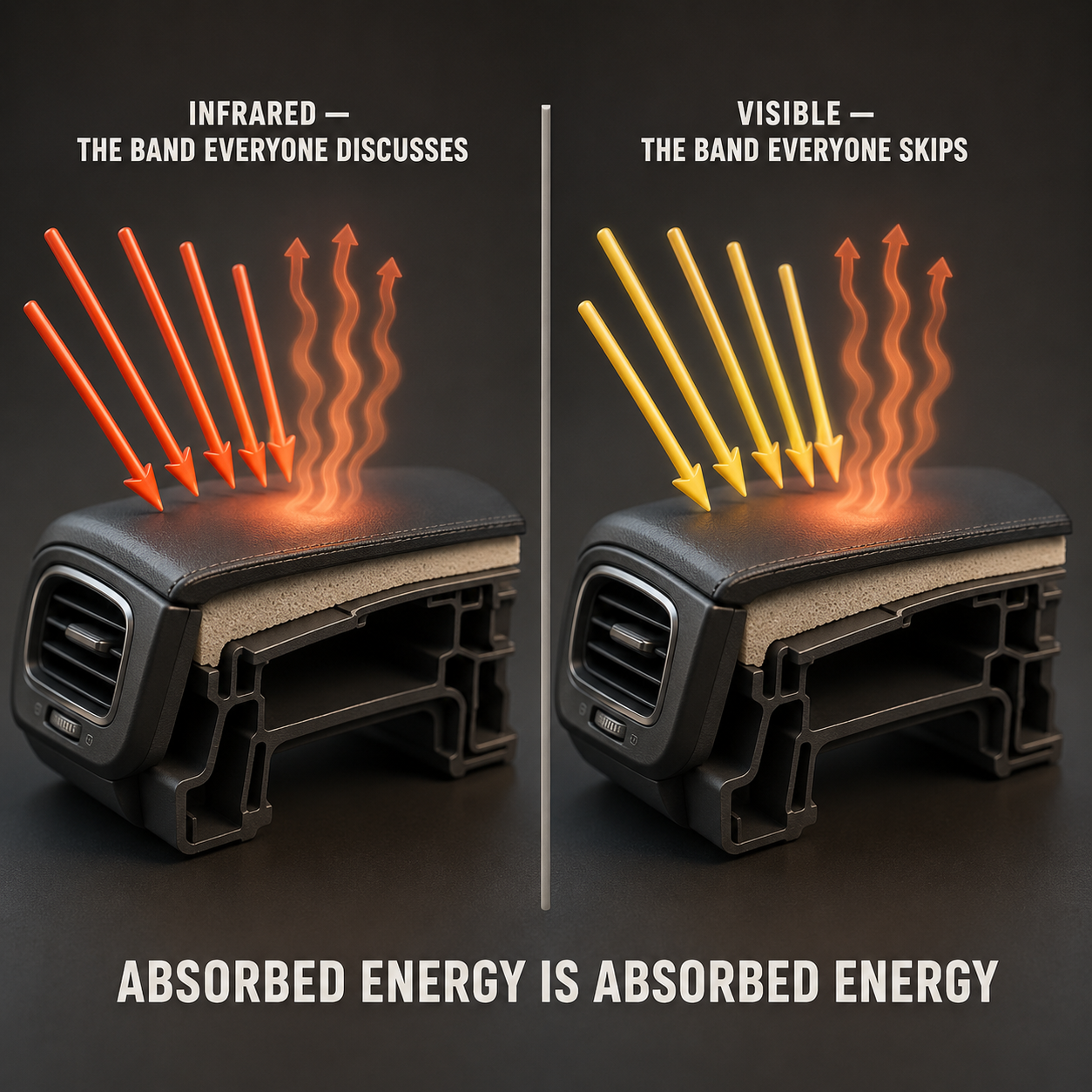
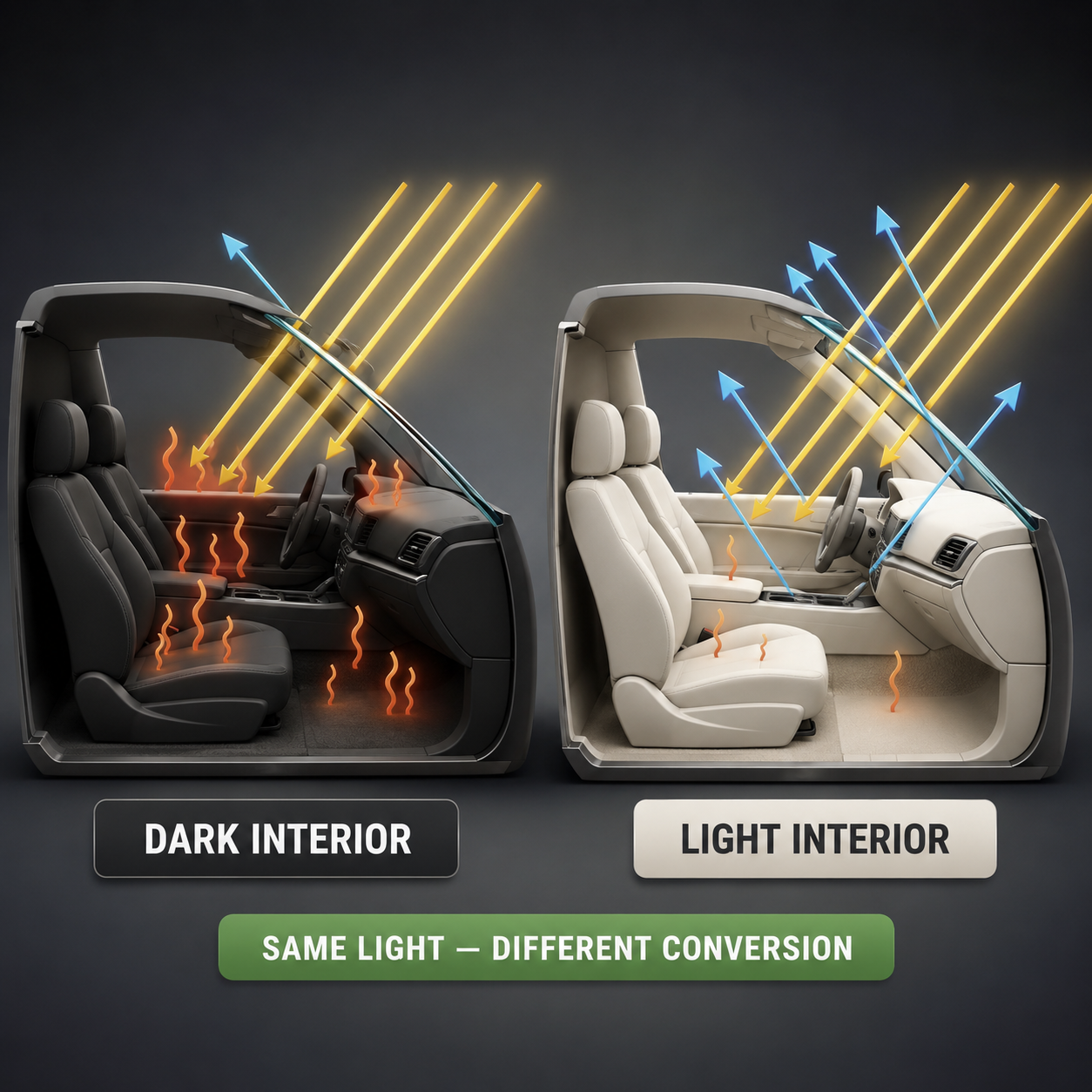
Interior materials determine how much of the visible band converts. Dark surfaces absorb the overwhelming majority of visible light striking them; lighter surfaces reflect more of it back. Interior color is a genuine thermal variable — one of the few a vehicle owner controls directly.
This chapter plants a flag that later measurement chapters will return to: any metric scoped only to infrared is, by construction, blind to nearly half of the energy in play. That blindness is not a small technicality. It is 44% of the story.
If you're just finding this page, here's the quick context: our focus is sharing the science behind the sun's energy and how window film actually affects it. This is one chapter in an ongoing series — to see more, visit our page or give us a follow to keep window film and sun's energy facts coming to your feed.